Showing posts with label hospitals. Show all posts

Friday, 21 February 2020

'A Very Dangerous and Anxious Sitation': European Refugees and the Retreat Hospital, 1938-1945


By Dr. Nicholas Melia, Archives Assistant, Borthwick Institute for Archives
_________________________________________________________________________________

In spring 1939, John W. Harvey, professor of philosophy at Leeds University and a prominent Quaker, wrote to Dr. Arthur Pool, Medical Superintendent at the Retreat Hospital, requesting help in finding work and hospitality for a ‘very distinguished’ émigré psychoanalyst who had fled Vienna in the aftermath of the Anschluss. The letter, preserved in a file of correspondence and papers in the Retreat Archive at the Borthwick institute relating to applications for posts by European refugees before and during the war (RET/5/6/16), explains that not only had Dr. Maxim Steiner ‘heard of the Retreat’, but came ‘with very strong recommendations from Prof. Freud’, to whom Steiner acted as physician and dermatologist in Vienna.
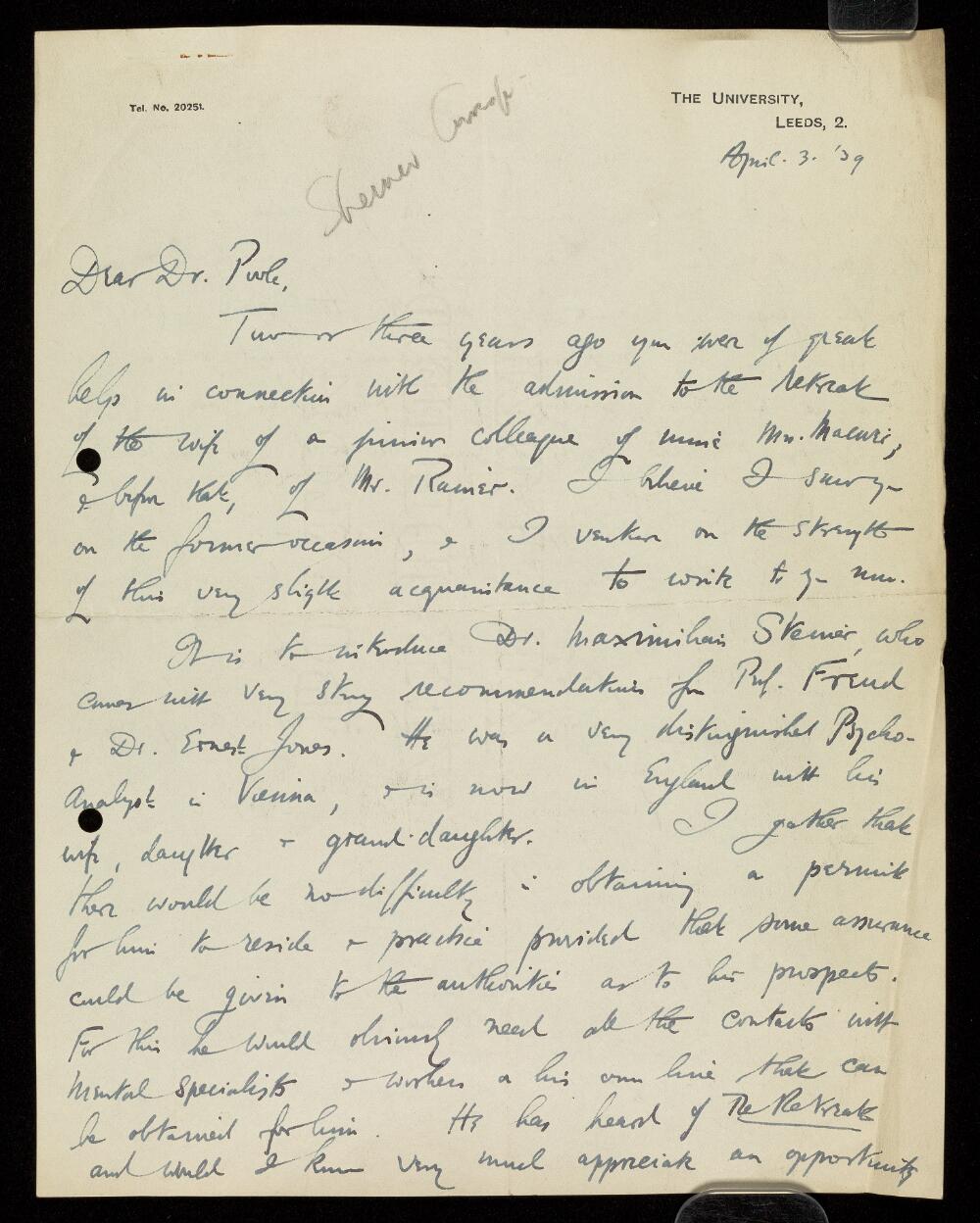
Letter from John W. Harvey, University of Leeds to Dr. Arthur Pool concerning Dr. Maxim Steiner, April 1939.
Twelve months earlier, Freud had written to Ernest Jones, president of both the International Psychoanalytical Association and the British Psycho-Analytical Society, begging him to aid Steiner’s passage to England: ‘I cannot claim that he is important as an analyst’, wrote Freud, ‘but […] he is a special friend of mine’.(1) Jones appears to have shown the letter to Harvey some time later, and, despite the personal, rather than professional tenor of Freud’s recommendation, Pool nonetheless met the 62 year old Steiner over tea in York. In his response to Harvey, he described Steiner as ‘very alert intellectually and younger than his years’, despite suffering with a self-confessed depression resulting from the ‘terrible things’ afflicting Europe.

While Steiner was not ultimately able to secure work at the Retreat, he was in no sense the only physician to seek refuge from Nazi persecution in the UK or, indeed, at the Retreat. A Quaker poverty relief unit had been active in Vienna for some years, and Freud himself had dined at the Friends Society there, likely through acquaintance with British Quaker psychoanalyst John Rickman. Rickman had moved to Vienna in 1920 and, with his wife Lydia, spent much time working with the unit to alleviate poverty. In fact, the Friends War Victims’ Relief Committee (later the Friends Relief Service) had acted to organize aid and hospitality for Europeans affected by poverty, war and political instability since the Franco-Prussian war in 1870, and was ultimately awarded the Nobel peace prize in 1947 for its wartime work.
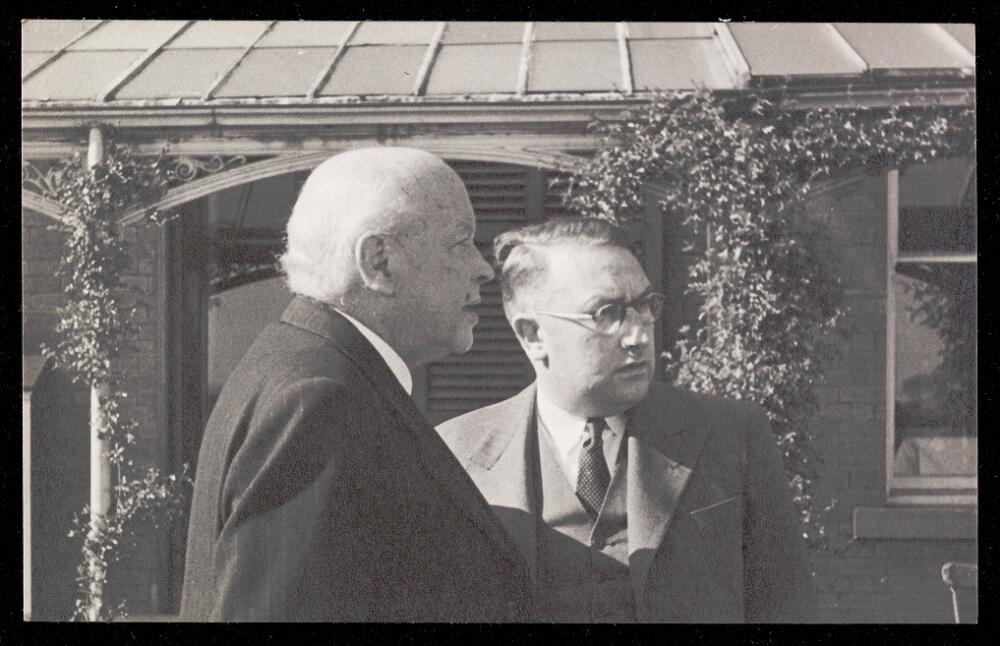
Photograph of Arnold S. Rowntree with Dr Arthur Pool, Retreat Physician Superintendent, 1946.
It is no surprise, therefore, that Quaker responses to the rise of fascism in Europe were coordinated early. The German Emergency Committee (later Friends Committee for Refugees), which played a vital role in the 1938 Kindertransport, was established in 1933, and within months of the Anschluss and annexation of Sudetenland, the Retreat became the recipient of the first of many applications for work and hospitality, mostly via the mediation of Quaker agencies and networks. The Retreat Management Committee ‘felt it was right to offer what hospitality it could to refugees from central Europe’ and had, in fact, signaled that it was ‘anxious to help in any way’ possible a matter of days after Kristallnacht. A few weeks later, the Committee responded to a request from the Vienna Society asking for help in ‘getting non-Aryans to England’, and by January 1939, had ‘committed [itself] to trying to get two doctors into the country – a Dr. Koch from Vienna and a Dr. Kiewe from Germany’. It was also working to provide hospitality for a third - Dr. Fritz Kraupl - already in London, and had already hosted Dr. Gretl Hitschmann earlier in 1938, who wished to gain ‘insight into the work of an English Mental Hospital’, and had, Management Committee minutes reveal, been ‘forced to leave Austria because she is a Jewess’. Shortly thereafter, the Committee would also agree to provide work running the Male Nurses Hostel for Manfred and Ilse Tallert, who had landed in Whitby while fleeing Europe for Shanghai.

Little correspondence survives regarding the successful arrival in April 1939 of Dr. Siegfried Kiewe, but Management Committee minutes tell us that he had been forced to leave Berlin ‘on account of his being a Jew’. The Committee offered hospitality ‘for an indefinite period’, and psychiatrist and family were lodged with Retreat secretary Mr. Burgess at Garrow Bank. Kiewe initially undertook laboratory, dispensary and massage work at the hospital, but in 1941, the Committee and Board of Control approved his undertaking of locum duties, and he continued thereafter as a salaried Assistant Physician until retirement in January 1959. Upon receipt of the Alfred and Margaret Torrie award, given to staff making an outstanding contribution to the wellbeing of patients, Kiewe payed tribute to the ‘kindness, understanding and tolerance’ he had received from the moment of his arrival in York. He died in 1986 at the age of 105.(2)

Dr. Fritz Kraupl, a medical dietician from Sudetenland exiled in London with experience of treating nervous disorders, was initially invited to the Retreat as a guest of the Committee with the intention of undertaking a kitchen traineeship. However, the committee felt that it would be inappropriate to place a male physician into a kitchen in which the ‘staff are wholly female’, and having taken up residence on 31st July 1939, Kraupl was found work in the Retreat laboratory, before obtaining a Clinical Assistant post at the Crichton Royal, Dumfries, in May 1940.

Securing safe passage for Dr. Rudolph Koch, however, proved more difficult. The Vienna Society of Friends approached Pool in November 1938 seeking hospitality and work for a physician ‘just been released from the concentration camp’. In correspondence, Koch declared himself ‘compleatly [sic] healthy and willing to work’, but stressed the need to escape from Vienna with the ‘utmost urgency’. Given the prohibitive implementation of the UK’s immigration legislation under the 1919 Aliens Restriction Act and Aliens Order 1920, which severely limited the possibility of refugees gaining employment, Pool was unwilling to try to engage Koch as a physician. Instead, he submitted a formal request to the Home Office for permission to employ a ‘foreigner who has left or wishes to leave Germany or Austria on political, racial or religious grounds’ as a laboratory technician. The combination of an intensifying climate of Home Office suspicion and the delay in processing applications due to a huge increase in numbers of applicants, however, took its toll on the Koch family. This is most clearly felt in the series of increasingly desperate letters from Koch’s mother preserved in the correspondence file, who wrote directly to Pool to express ‘the greatest worry about my son’.

Despite Pool’s desire to help and, if necessary, take Koch in ‘on no official basis’, the Germany Emergency Committee received correspondence from the Home Office on February 15th 1939, rejecting the application and stating that ‘we are unable to agree to foreigners, especially foreign doctors, coming to the United Kingdom to settle in employment as laboratory assistants’. Two weeks later, Pool reported to the Retreat Committee that ‘arrangements for admitting Dr. Koch […] had fallen through’.
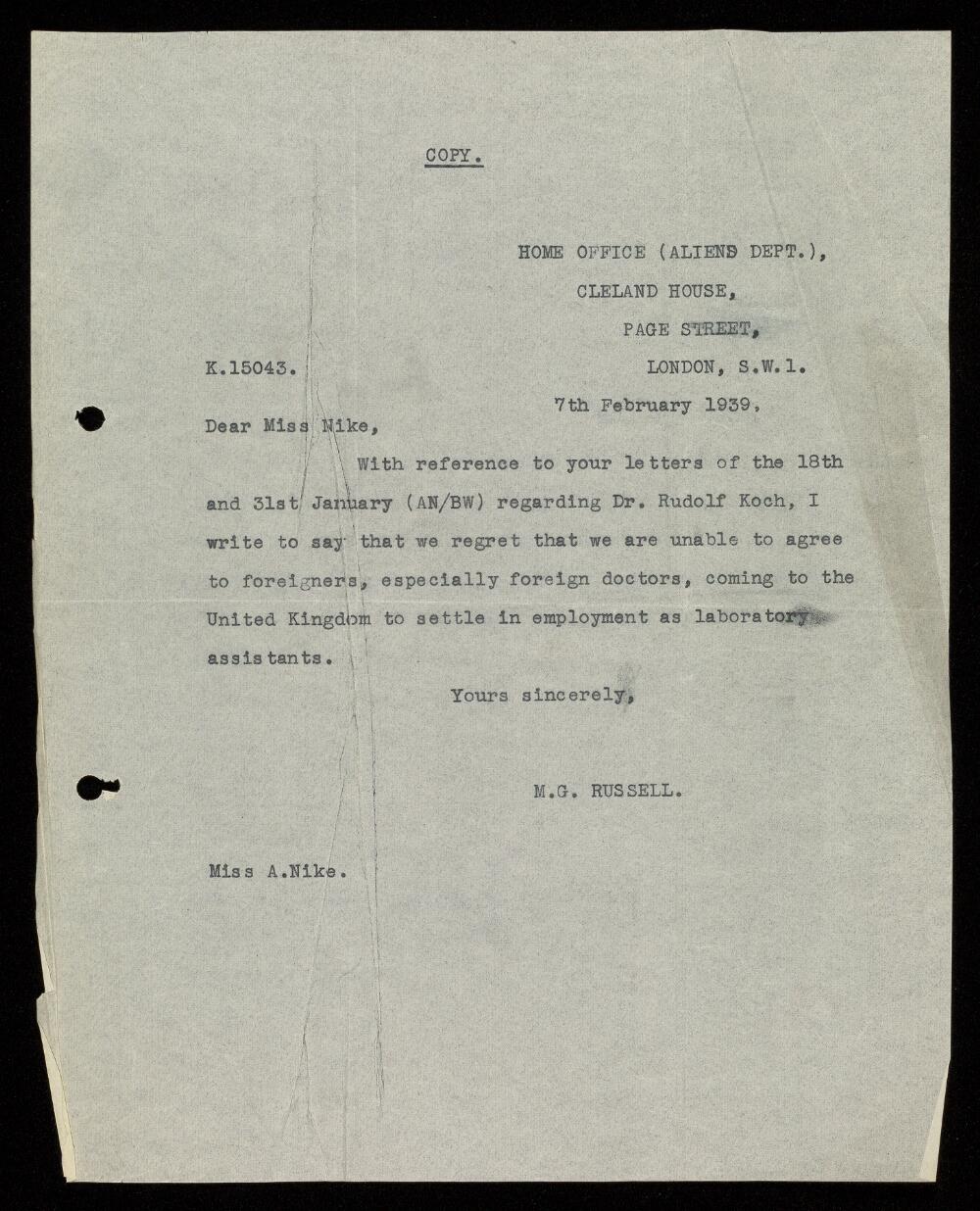
Letter from M.G. Russell, Home Office (Aliens Dept.) to Miss Nike, Society of Friends' Germany Emergency Committee, concerning Dr. Rudolph Koch, February 1939.
Letter from M.G. Russell, Home Office (Aliens Dept.) to Miss Nike, Society of Friends' Germany Emergency Committee, concerning Dr. Rudolph Koch, February 1939. 
The sincere efforts and commitment of the Committee notwithstanding, many aspects of the correspondence file make for uncomfortable reading. The Retreat had agreed in 1938 to take ‘our quota of refugee girls permitted by the home office to train as nurses’, and the Annual Report of 1941 tells us that by the end of that year, ten refugees were to be counted among a total nursing staff of 72. However, women who had gained success in their field and sought to utilise professional medical expertise received a significantly shorter shrift than did their male counterparts. Psychologist Rose Rand, the only registered female member of the Vienna Circle, which included Rudolf Carnap and Kurt Gödel amongst its numbers, and Ludwig Wittgenstein and Karl Popper amongst its advocates, was described by her peers as ‘a specially gifted philosopher with high promise’.(3) She had worked and studied psychology at the University of Vienna Psychiatric Clinic, where her work with women suffering with mental and nervous disorders led the director of the clinic to describe her as ‘uncommonly gifted for the right treatment of insane patients’. Upon fleeing Vienna, Rand had obtained a post in an ‘epileptic colony’, but had become ill with exhaustion and was, in January 1940, ‘living in London alone on £1 per week’.

Pool was dismissive of Rand’s appeal. In a letter to the Nursing and Midwifery Department of the Central Office for Refugees dated 22nd January 1940, he described Rand pejoratively as a ‘blue-stocking type’: ‘I feel […] suspicious of the very intellectual type who finds it difficult to engage in ordinary domestic pursuits. I prefer the type who can get down to washing dishes and if necessary scrubbing a floor’. ‘If you feel that you would like me to see her’ Pool concluded, ‘well and good, but from your description, I am not at all impressed’. Rand was forced to look elsewhere for hospitality.
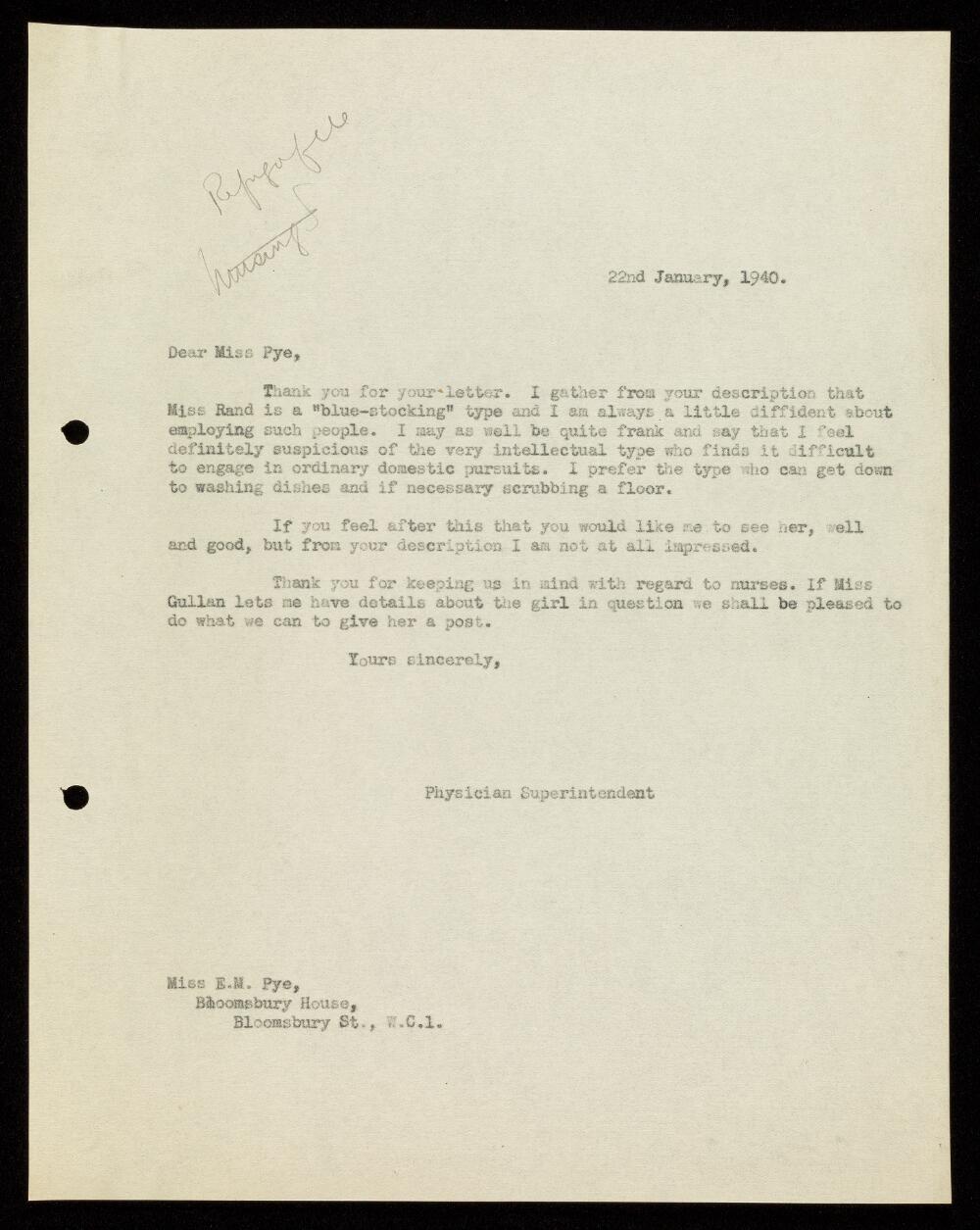
Letter from Dr. Arthur Pool to Miss Pye, Nursing and Midwifery Department of the Central Office for Refugees, concerning Rose Rand, January 1940.
The Committee continued to receive and assess applications throughout the war. In the two years following October 1938, it had considered applications from 62 European refugees, and by mid-1939, with applicants at once increasingly desperate and numerous, requests for work were being routinely refused. Probationary Nurse Ilse Gunszt, for example, a ‘non-Aryan Christian [opposed] to the new German ideas’, was required to leave Gt. Yarmouth Hospital when it was requisitioned by the military in 1940, and all ‘aliens had to move 20 miles inland’. She was the first of many to receive a standardized, albeit apologetic, response from Pool: ’[u]ntil the Government make more definite plans, it is unwise to take on our nursing staff [any more] applicants’.

The following year, a Special Meeting of the German Emergency Committee heard with some perturbation accounts of ‘the amount of mental breakdown among refugees’. In a report in the correspondence file, we read that ‘it is quite clear that there is a growing need for special care for refugees who have not been able to overcome the strains and stresses through which they have lived in recent years’. The report raises concern over the increased risk of attempted suicides, and the need for provision of institutional treatment for European refugees. It is an image much in evidence in the latter half of the correspondence file, which increasingly couples applications for work with appeals for treatment.

While the file largely leaves the fate of its supplicants unresolved, many had either already managed to escape from mainland Europe, or would find safe haven elsewhere in the UK. This was not the case for all, however, and this is no more apparent than in an unanswered letter from December 1938, in which we hear from the brother of Johannes Braun, a ‘very successful actor’. Johannes, ‘tall and broad, good looking’ was prohibited from working in Germany, had retrained as a masseur and, we are assured, ‘could become after some instruction a male nurse’. Dr. Konrad Braun described his brother’s situation as ‘very dangerous and anxious’: a third brother, also a doctor, had already been ‘arrested without any reason but that he is of Jewish extraction’. While ‘Johannes is still free’, Konrad warns us, ‘there is actual danger for his life and existence’.

The Braun family archive, held at the Bodleian Library, reveals that Johannes was arrested by the Gestapo in spring 1942 and taken to the Majdanek concentration camp near Lublin, where he contracted tuberculosis. Within four months, he was dead.

Notes

(1) Letter from Sigmund Freud to Ernest Jones, 23 April 1938. Paskauskas, R. Andrew (ed.). The Complete Correspondence of Sigmund Freud and Ernest Jones, 1908-1939. London: The Belknap Press of Harvard University Press, 1995, pp. 761-762.

(2) AJR (Association of Jewish Refugees) Information, Volume XLI No. 12; December 1986, p. 7.

(3) Rentetzi, Mari, ‘”I Want to Look Like a Lady, Not Lie a Factory Worker” Rose Rand, a Woman Philosopher of the Vienna Circle’. In Suárez, Mauricio; Dorato, Mauro; and Rédei; Miklós (eds.), EPSA Epistemology and Methodology of Science: Launch of the European Philosophy of Science Association, Dordrecht, Heidelberg, London and New York: Springer, 2010, p.240

Bibliography

Paskauskas, R. Andrew (ed.). The Complete Correspondence of Sigmund Freud and Ernest Jones, 1908-1939. London: The Belknap Press of Harvard University Press, 1995.

Rentetzi, Mari, ‘”I Want to Look Like a Lady, Not Lie a Factory Worker” Rose Rand, a Woman Philosopher of the Vienna Circle’. In Suárez, Mauricio; Dorato, Mauro; and Rédei; Miklós (eds.), EPSA Epistemology and Methodology of Science: Launch of the European Philosophy of Science Association, Dordrecht, Heidelberg, London and New York: Springer, 2010.

Steiner, Riccardo, ‘It is a New Kind of Diaspora’: Explorations in the Sociopolitical and Cultural Contexts of Psychoanalysis, London and New York: Karnac Books, 2000.

Thursday, 18 January 2018

Eyewitnesses to History in the Retreat Archive

This is the sixth in a series of blog posts celebrating the Retreat archive as we publicise the availability of the digitised archive. As we have worked on this digitisation project there have been many items that have caught our eye along the way. In this blog post, one of our digitisation assistants, Jane Rowling highlights some of the interesting items she has encountered.

*************************************


One of the pleasures of digitising an archive like that of The Retreat, is the number of throwaway comments and random snippets which refer to bigger events in the history of Britain and the world. The correspondence files are particularly rich in this regard, and offer a fascinating insight into life during history’s “Big Events”, through the eyes of people who were there at the time. This blog will pick out a few of my favourite examples, although there are many more among the thousands of digitised documents from this archive which can be found online by browsing our catalogue.

The Tooley Street Fire


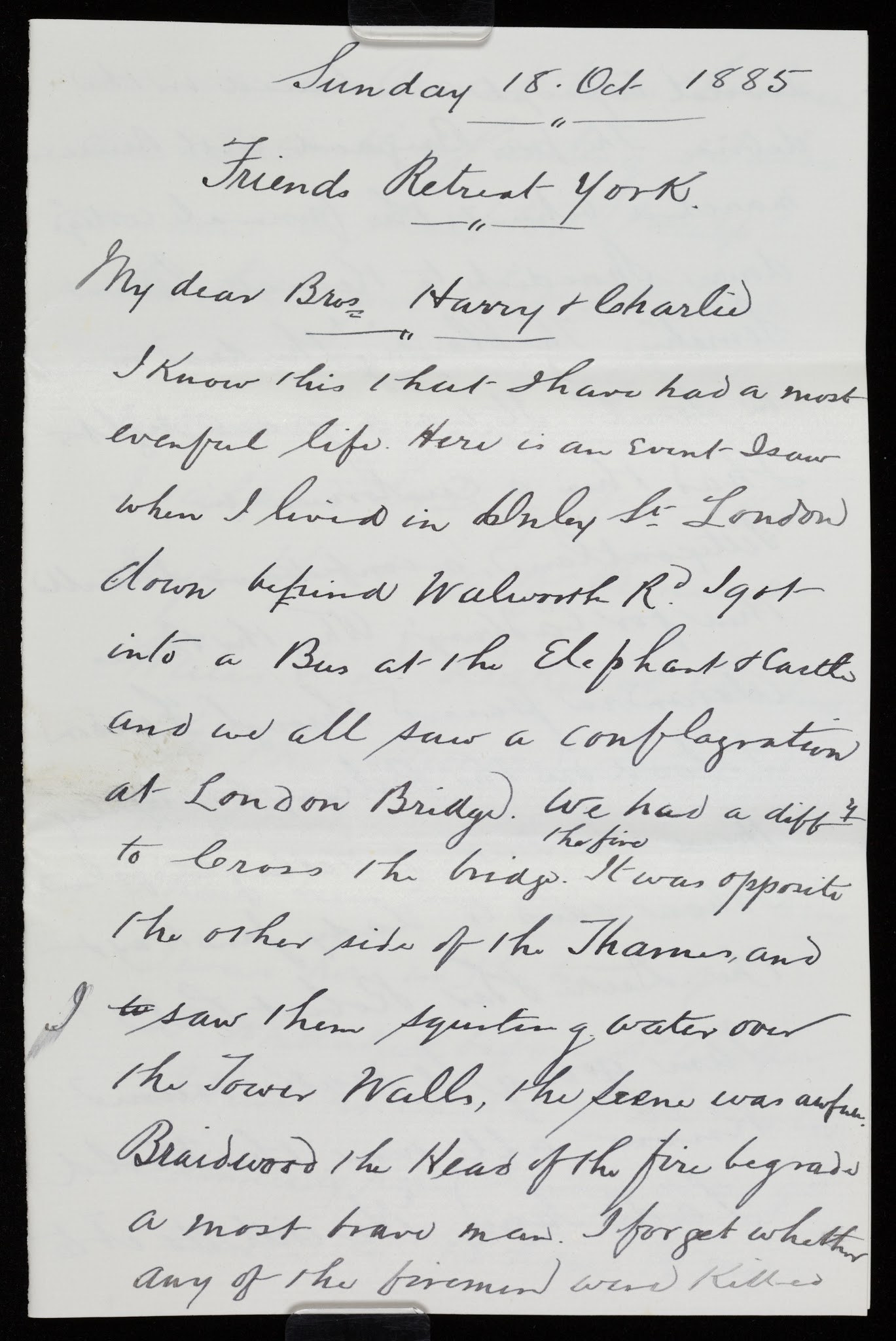
Writing in 1885, Mr Charles Cave Wilmott, a patient at The Retreat, recalled one of his experiences as a London resident earlier in his life:

RET/6/19/1


“I got into a Bus and at the Elephant & Castle and we all saw a conflagration at London Bridge. We had a diffy to Cross the bridge. The fire It was opposite the other side of the Thames, and I to saw them squirting water over the Tower Walls, the scene was awfull [sic]. Braidwood the Head of the fire begrade [sic] a most brave man. I forget whether any of the firemen were killed several bu people were buried in the debris. The fire Brigade with Braidwood marched behind the funeral cortege down Shoreditch to Kensall Green Semetry [sic], The playing the dead march in Saul. It was a grand sight.”

This memory has many parallels with the Tooley Street Fire of 1861, which was often referred to as the greatest fire since the Great Fire of London. This took place in the warehouses which lined the Thames close to London Bridge and took two weeks to extinguish. As with other disasters in the Victorian city, the Tooley Street Fire drew crowds of over 30,000 people, standing on the bridge and the opposite side of the river, bringing traffic to a standstill, and accounting for the difficulty which Mr Wilmott’s bus experienced in crossing. James Braidwood, the Superintendent of the London Fire Engine Establishment, was in fact killed during the effort to extinguish this conflagration, buried under a wall which collapsed on him as he was attempting to assist one of his firemen. A funeral cortege like the one Mr Wilmott remembered , a mile and a half long, carried Braidwood to his final resting place. This event was a major spur for the creation of the Metropolitan Fire Brigade in 1866.


The First World War


Day to day history is also captured in vivid detail in the Retreat Archive. The First World War had a greater impact on everyday life in Britain than any previous war. For the first time, war was on the doorstep, and it’s effects can be seen everywhere in correspondence dating from 1914 to 1918. This led to the issuing of new rules and regulations which would govern people’s lives, and a level of fear began to affect even the most mundane of interactions with strangers. 

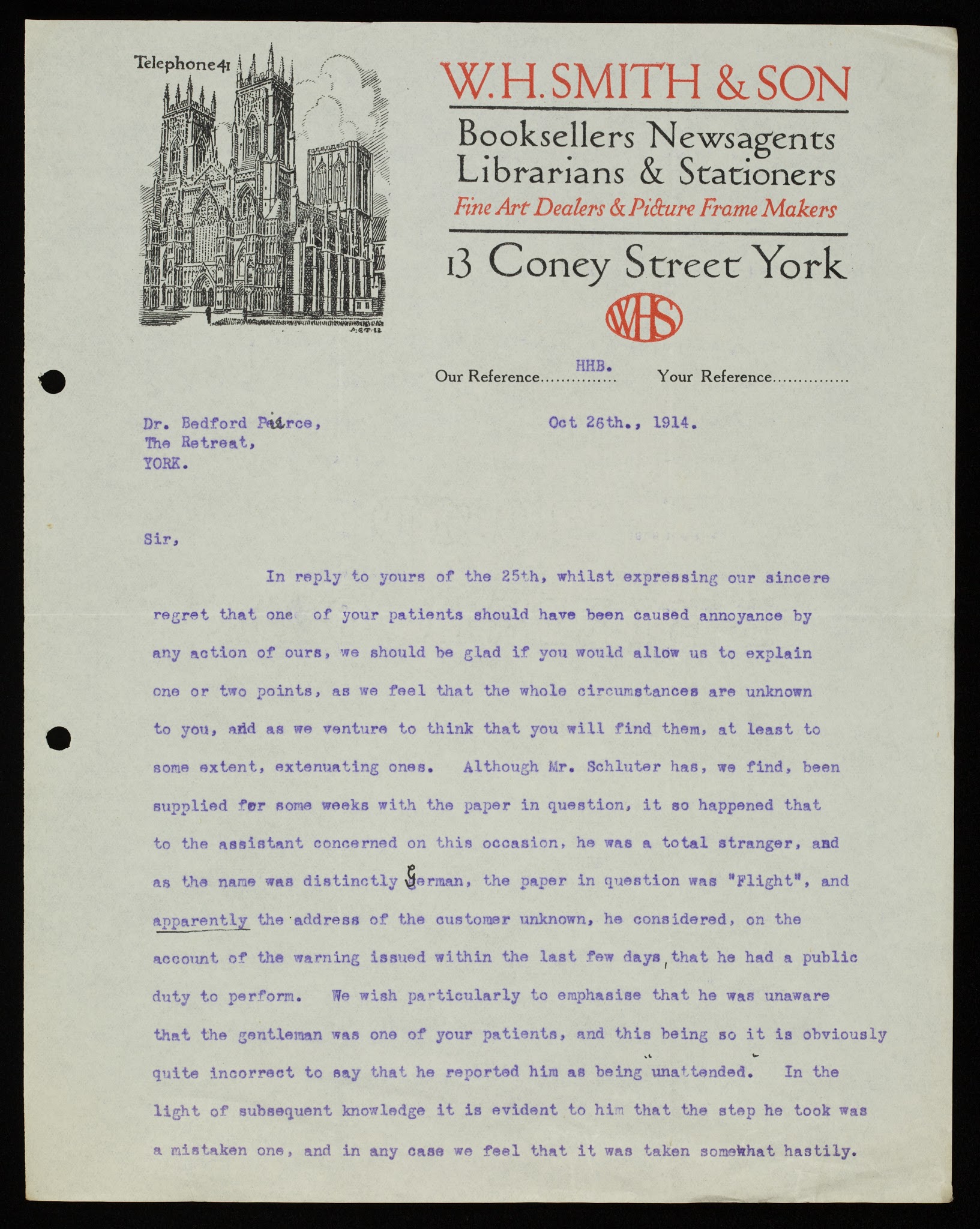
Take, for example, the case of Harold Schluter, a patient at The Retreat in 1914. While shopping in York, he entered a branch of WHSmith to order a book on flight, and was promptly reported to the police by the shop assistant on suspicion of being a German spy. 

A letter from WHSmith justifying the action of the assistant stated that "as the name was distinctly German, the paper in question was 'Flight' and apparently the address of the customer unknown, he considered on the account of the warning issued within the last few days, that he had a public duty to perform"

RET/6/20/1/18/12


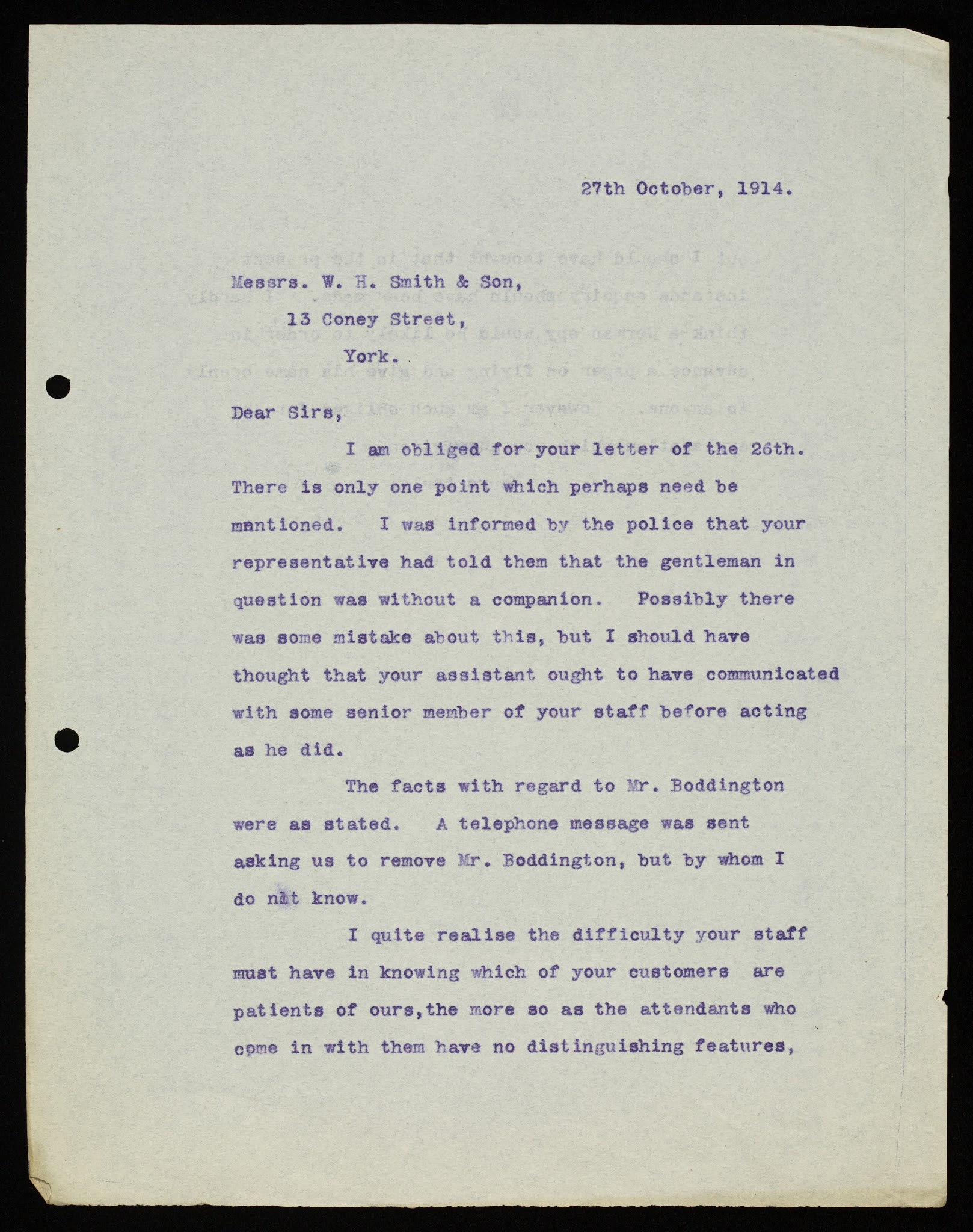
As was drily noted in the Retreat’s response to the shop’s apology: “I hardly think a German Spy would be likely to order in advance a paper on flying and give his name openly to anyone.”

RET/6/20/1/18/12


The First World War was a difficult issue for members of the Society of Friends, like Dr Bedford Pierce, the Superintendent of the Retreat. Correspondence from 1914-1918 is littered with references to the War, to conscription, and to the problems arising from being a committed pacifist, but also feeling a deep sense of loyalty towards Britain. 

In a letter to a friend, dated 27th February 1918, Dr Pierce wrote: "I am interested in hearing about your son going out. I fear it will be an anxious time for you. One cannot but feel that this year the promise of spring is hateful. It would be much more encouraging if there was a little prospect of an end to it, but if the settlement is by fighting it will be a long time before the conclusion is reached.” This links to the feelings of many members of the Society of Friends, who felt that Germany and her allies represented an evil which must be resisted, but that fighting was not the answer. 

Dr Pierce was often asked to allow patients to present themselves for medical inspection by the army doctors in order to see whether they could be judged fit to join up and fight. In some cases, this was allowed for the patient’s own peace of mind, despite the fact that they would almost certainly be judged unfit due to their mental or physical conditions; some patients suffered great distress at the thought that they had not volunteered to serve their country. As a result of this suffering, which could exacerbate existing mental illnesses like depression, or delusions of having committed a great sin by damaging self-esteem, Dr Pierce often arranged for patients to see army medical officers to be examined, producing a flurry of correspondence with family and friends.

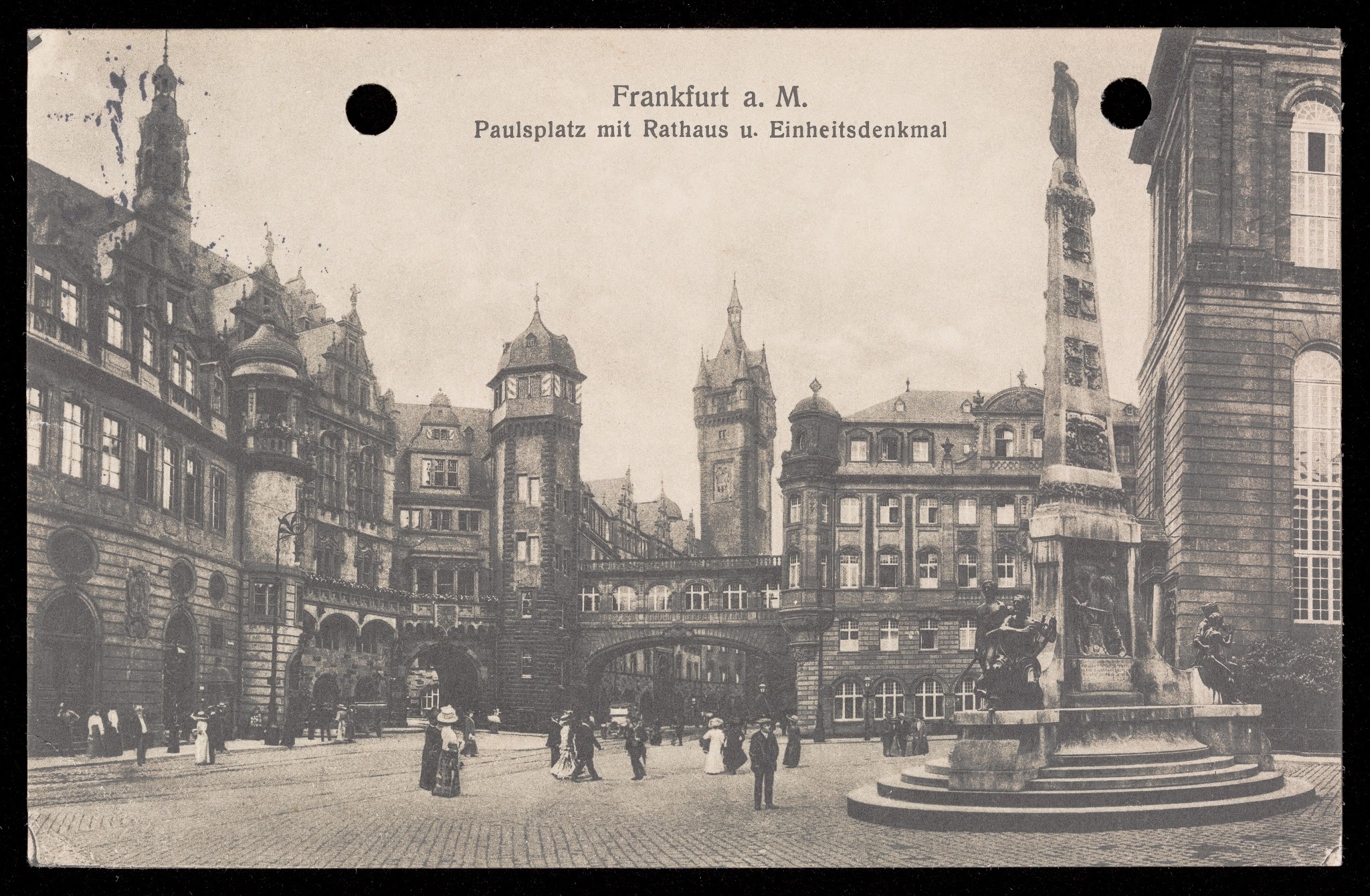
Another document in this archive shows the calm before the storm of the First World War from a different perspective.

RET/6/20/1/7/35


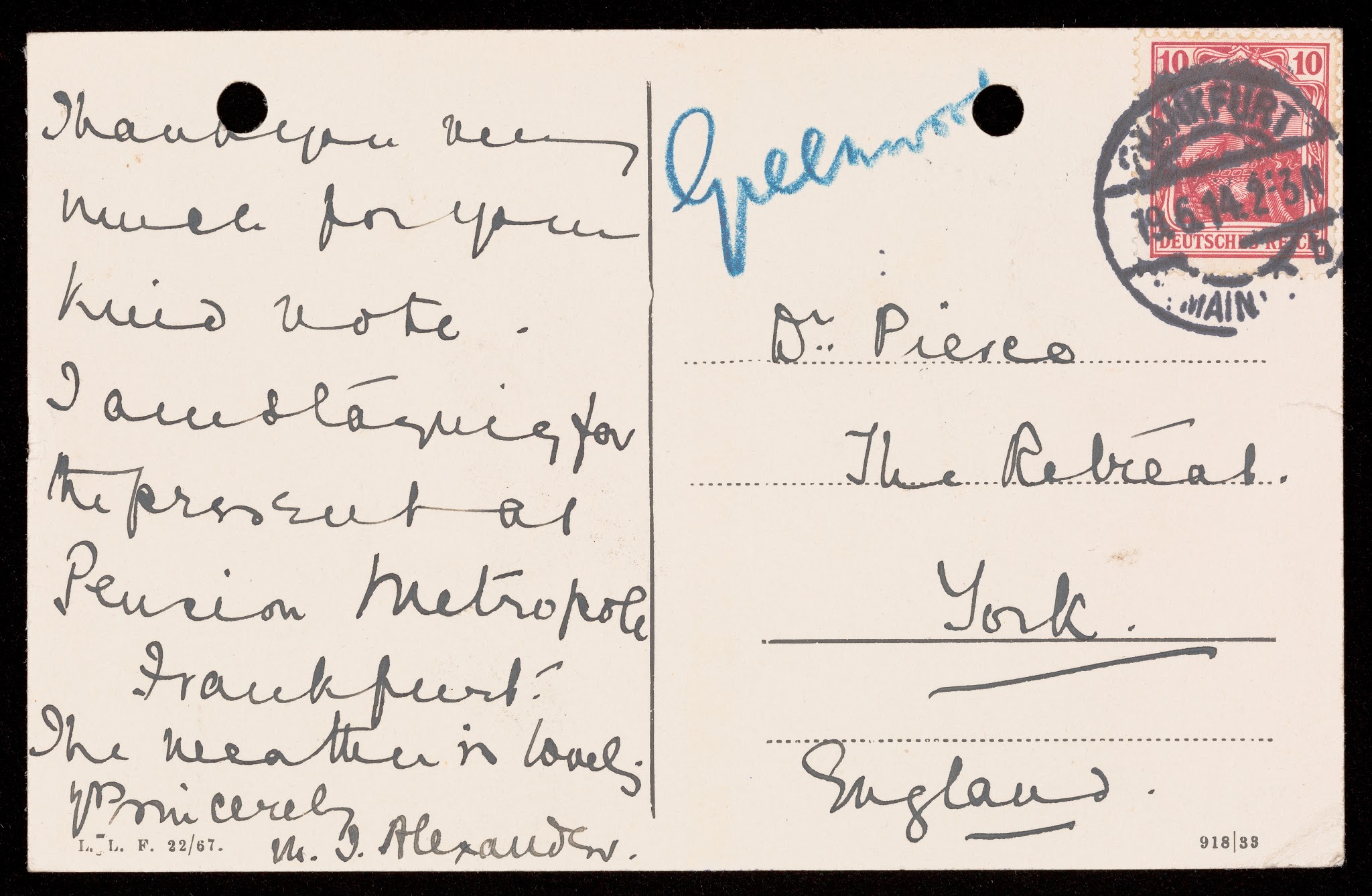
This postcard, dated just two weeks before the assassination of Archduke Franz Ferdinand, the event which is often described as the final spark to the tinderbox of conditions which existed before the First World War, was sent from Frankfurt. There is no sign in the sunny photograph of any dark clouds on the horizon. The postcard’s sender writes:

RET/6/20/1/7/35


“Thankyou very much for your kind note. I am staying for the present at Pension Metropole Frankfurt. The weather is lovely.”


Technology in the Home


The Retreat Archive also offers a view of a world of rapid technological advance, with recognisable innovations that we still use in some form today, as well as some which never quite caught on.

RET/3/3/2/16


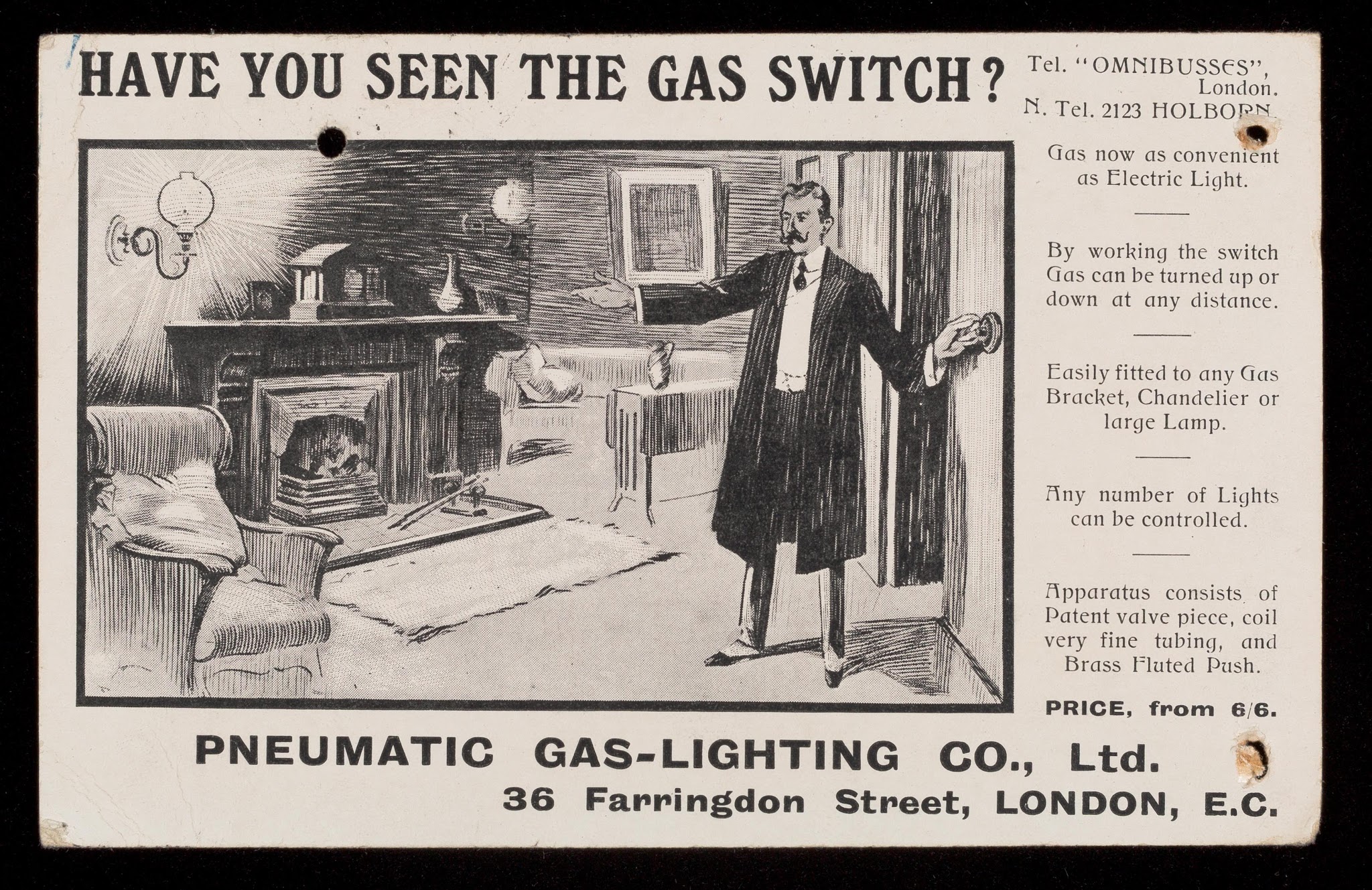
The competition between gas and electric lighting in the home is captured in this advertisement of 1906/7, which declares that gas was “now as convenient as Electric Light”. In the twenty-first century, with almost ubiquitous electric lighting, it seems odd to remember that this was by no means a foregone conclusion, and that the struggle between electricity and gas companies was fiercely competitive.

RET/4/3/1/1


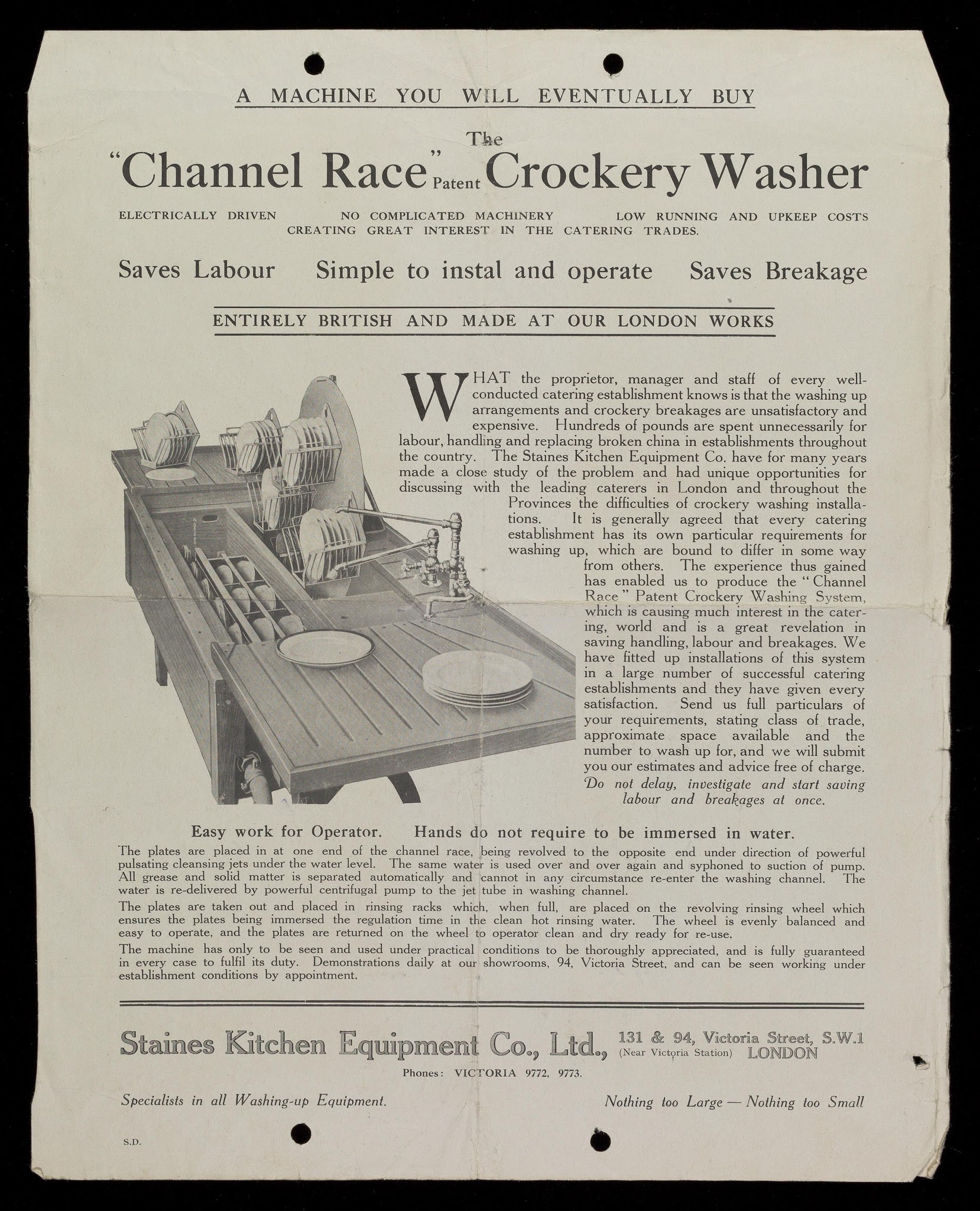
Another invention which we can recognise today is the dishwasher, but this one, advertised in 1921 seems very large and complex by today’s standards. The advert confidently declares that the “Channel Race” Patent Crockery Washer is “A machine you will eventually buy.” 

The early twentieth century produced a wealth of labour-saving devices for domestic use, as the era of the domestic servant came to a close. After the First World War, women who had taken on work which had previously been the preserve of men often wanted to continue working rather than return to domestic service. Although many women lost their wartime jobs in favour of men returning from the fighting, the world of work, and attitudes to female labour both inside and outside the home had changed forever. 

These are just a few of the topics, relating to wider themes in history, which can be accessed through the archives of The Retreat. 


More information about the Wellcome Library funded project to digitise the Retreat archive can be found on the project pages of our website. Digital surrogates from the Retreat archive project are available via the Wellcome Library and can also be found by following the links from the Retreat catalogue.

Thursday, 14 July 2016

Just what the Doctor ordered?

A new blog today on medicinal alcohol, courtesy of our Summer Intern (and York history student) Gaby Davies.

Whilst looking through the York Medical Society records, it was interesting to find the York County Hospital ‘Wines and Spirits book’ 1861-1865.  The pages contain lists of names of doctors, rooms and incidents, and the corresponding number of servings of port, sherry, brandy or gin that was needed.  Doctors seem to be doling out spirits and wines on a daily basis to their patients, and giving more for particularly bad events; September 29th 1861 required 20 servings of brandy due to the ‘Lendal Bridge accident yesterday’, and on 9th January 1861 8 servings of port were needed due to a ‘railway accident’.  This seems to make it clear that this is medicinal alcohol, rather than that beverages ordered by patients (and not doctors getting through a particularly difficult shift).

BI, YMS/5/1/2

This reliance on alcohol seems startling from a contemporary viewpoint, but in the early- to mid-19th century, Victorian doctors relied on alcohol heavily for quite general medical purposes, although towards the late 19th century medical opinion did start to turn against alcohol as a catch-all solution to ailments, and it started to be seen harmful and addictive.  Before this point, however, alcohol was prescribed liberally both as a stimulant and a sedative.  Brandy was used to ‘stimulate circulation’, to resuscitate the unconscious much like smelling salts, and in emergencies, especially outdoor pursuits such as hiking and skiing.  In hospitals it was often given intravenously or even (wince) rectally.  Even in 1920, physician William Hale White espoused its virtues, primarily as ‘A pleasant depressant, peculiarly efficacious in inhibiting peripheral impulses, such as pain here, and discomfort there, that it diminishes those trivial worries which bother the sick.  In larger doses it has the advantage of inducing sleep.’  This rather unscientific viewpoint may have been the reason the alcohol in this book seems to have been given to patients so regularly; for lack of other drugs it was a quick solution to mild pain or lack of sleep, and was an easy way to improve a patient’s comfort.  It was even used for children when teething or colicky, and many ‘tonics’ sold by unlicensed practitioners for babies could be up to 50% alcohol.  The fact that it was ‘opium free’ was often enough to convince mothers that the tonic was safe.

Victorian doctors also used alcohol enthusiastically as a painkiller for the dying, along with ether and opium.  Combinations of ether, brandy and port wine were often used as a stimulant for a weak heart and to promote circulation, and brandy was additionally favoured for its aid to the digestive process. Doctor William Munk recommended that for those with a terminal illness, small quantities of alcohol should be given frequently, favouring port and sherry over champagne as the latter tended to wear off quickly.  

Choosing the right alcohol for the right patients.
BI, YMS/5/1/2

It was not just in England that this culture of medicinal alcohol was prevalent; in America during Prohibition, doctors could prescribe spirits to their patients and there was even a medical beer campaign, which congress had shut down by 1921 for fear that, as the New York Times put it, ‘druggists become bartenders and the drug store a saloon.’

Looking through The Retreat documents we find similar evidence of this general use of alcohol by doctors.  One 1860s circular advertising ‘cheap light wines’ has two full pages of doctors’ recommendations, published in the Medical Times, of how wine can be used as an aid to breastfeeding (unless you are working class, in which case beer will do), a cure for acidity which would ‘add ten years to your patient’s life’, a drink to ‘fill the veins with pure healthy blood’ and as a healthier substitute to tea.  

BI, RET/4/8/2/134

Pure clean claret for nursing mothers?
BI, RET/4/8/2/134

Several articles also recommend that wines are ‘admirably adapted for children’, and that for children ‘puncheons of cod-liver oil might be spared at the age of 16-20, if, at the age of 7-10…the physician had said, ‘give her some kind of light, clean tasting, sub-acid wine…so that it might tempt her to relish her mutton’.  The document is an advertisement so these articles have clearly been cherry-picked, but the fact that they were published at all despite medical opinion beginning to turn at this point is an insight into the respect given to various quasi-scientific opinions of individual doctors, and the resulting effect that this had on patients.

‘Medical alcohol’ would clearly have worked, to a certain extent, in dulling pain and making patients fall asleep. It can only have been a relief for mothers when, after hours of crying, their teething babies would finally drift off thanks to some ‘medicinal’ tonic which was basically the equivalent of giving them a shot of vodka.  However, developments in the mid-to-late-19th century led to medicinal alcohol slowly declining as a cure.  A better understanding of the pharmacology of alcohol came about, improved alternative treatments were developed, anaesthetics such as chloroform and nitrous oxide became more widespread, alcoholism and its dangers to the human body became better understood and the temperance movement became more prominent.  Brandy was still occasionally recommended even in the 1930s as a general sedative, a food for those finding it hard to take in physical nutrition and up until the 1940s there were still debates as to whether it could help in cases of pneumonia.  This ‘wine and spirits’ book is a fascinating relic of a time where the virtues of alcohol were widely accepted and recommended by doctors, and can give us an insight into the lack of alternative, effective medicines at this time.  

And on a purely curious note, it leaves us wondering why the laundry maid regularly checked out 3 servings of port!


Port for the laundry maid?
BI, YMS/5/1/2


The Retreat Archive is currently being digitised.  More details are available at the Wellcome Library website.

Bibliography

Beverly Gage, 'Just What the Doctor Ordered' in Smithsonian Magazine (http://www.smithsonianmag.com/history/just-what-the-doctor-ordered-80480921/?page=2&no-ist)

Henry Guly, 'Medicinal Brandy' in Resuscitation (July, 2011).

Patricia Jalland, Death in the Victorian Family (Oxford, 1996).

R. H. Kinsey, 'An Address on Alcohol and on Drainage' in The British Medical Journal (1883).

The Rose Melnick Medical Museum, 'Medicinal alcohol and Prohibition' (https://melnickmedicalmuseum.com/2010/04/07/medicinal-alcohol-and-prohibition/)

William Hale White, 'Discussion on the value of alcohol as a therapeutic agent,' Proc R Soc Med. 1920.

Friday, 26 February 2016

York County Hospital and World War One

York County Hospital was established in 1740 and until 1977, when the current hospital opened, was the main hospital in York. The hospital was originally run as a charity, supported by wealthy subscribers. It continued to be run in this way right up to the 20th century when the income from subscriptions and investments was supplemented by patient fees and insurance schemes.  It joined the NHS in 1948 and treated its last patients in 1980. The original County Hospital buildings are still standing and can be seen just off Monkgate.

In 1914, when World War One broke out, the hospital allocated 50 beds for military patients. By the end of that year it had treated 102 sick and wounded soldiers. The percentage of military patients treated at the hospital increased throughout the war and, to accommodate them, two additional hutted wards were built at the back of the main hospital building. 

Photograph of sick and wounded soldiers,
Annual Report 1916 (BIA YCH 1/2/9)


Analysis of military cases
Annual Report 1916 (BIA YCH 1/2/9)
The hospital treated both medical and surgical patients. During 1916, amongst other medical cases, staff dealt with 7 cases of gas poisoning and 13 cases of trench fever. This extract of the surgical treatments carried out on military patients includes numerous bayonet, bullet and shrapnel wounds, as well as several shell shock patients.

During the First World War, around 10% of British casualties were classified as suffering from shell-shock. At the start of the conflict, it was believed that shell-shock was caused by physical head injuries resulting from bombardment. In 1915, a paper in the medical journal The Lancet put forward an alternative, psychological, explanation for the disorder noting that many soldiers that were suffering the symptoms of shell-shock had not received a head injury. By 1917, the British military authorities tried to limit the use of the diagnosis and continuing debates over causes and treatments created further controversy. By World War Two, to diagnose shell-shock was forbidden.   

List of gifts donated for wounded soldiers
Annual Report 1916 (BIA YCH 1/2/9)
Photograph of the night staff, 1914 (BIA YCH 1/6)
The coming of war meant that the County Hospital faced huge financial strain. With an existing debt of £3,800 and the price of commodities rising, the hospital’s 1916 annual report noted an increased expenditure of 24%. A special appeal in 1915-16 sought to raise funds and the generosity of hospital supporters is documented in the lists of gifts donated to the military patients. An extract of this list is included above, showing a range of the gifts given: from eggs, tobacco and newspapers to concert tickets, gramophone records and car rides.

By May 1919, the County Hospital had treated over 2000 military patients. As the hospital slowly returned to its peace-time operations, the wards built for the soldiers were converted into new treatment spaces. One space formed an orthopaedic department for discharged servicemen and other patients who required ongoing therapy. The continuing treatment of veterans was something at the forefront of the minds of those running the hospital, succinctly displayed in this quote from their annual report (BIA YCH 1/2/9):

"It is, of course, essential that those who have been disabled or broken in health in the service of the Country should receive the best possible treatment, and it seems obvious that such treatment is not most readily available at the general hospitals...Pending the satisfactory arrangement of conditions, the Committee, with the complete agreement of the Medical Staff have decided that the full resources of the Hospital shall be placed at the disposal of all discharged men who are recommended for treatment."

Lydia Dean
Archives Assistant


This blog is in part based on a forthcoming exhibition at York Teaching Hospital NHS Foundation Trust.

---

Sources:

Ben Shephard 'Pitiless psychology’: the role of prevention in British military psychiatry in the Second World War' in History of Psychiatry October 1999 10: 491-524


Edgar Jones, Ph.D., D.Phil. Nicola T. Fear, D.Phil. Simon Wessely, M.D. 'Shell Shock and Mild Traumatic Brain Injury: A Historical Review' in Am J Psychiatry 2007; 164:1641–1645

K.A. Webb From County Hospital to NHS Trust, The History and Archives of NHS hospitals, services and management in York 1740-2000 (Vol 1: History) Borthwick Texts and Calendars 27, UoY 2002
pp147-173


Friday, 29 May 2015

Who came to see the Retreat? A look through the Retreat Visitors’ Books

Queen Victoria and the Duke of Wellington didn’t visit the Retreat!
The monarch would never have signed herself “Queen Victoria” in 1856, and the signature of the Iron Duke in 1821 fails to match up with authenticated examples. Mischievous or deluded patients from the democratic Retreat “family” were probably responsible for these entries.
Queen Victoria’s name appears in the visitor’s book RET 1/4/4/2 but we don’t think it is a genuine signature
But many well-known people, from all over the country and from abroad, really did come to see the Retreat in its early days and they signed their names in the Retreat General Visitors’ Books: three volumes covering the years 1798-1822 (RET 1/4/4/1), 1822-1835 (RET 1/4/4/2) and 1837-1861 (RET 1/4/4/3).
Genuine royal visitors included the Grand Duke Nicholas, brother to the Emperor Alexander of Russia, who visited with a party of Russian notables on 12 December 1816. Important Russian visitors seem to have been a feature of the Retreat’s early years: in August 1814, the Emperor’s physician came, as did a Russian princess, and in July 1818 Grand Duke Michael, another brother of the Emperor, arrived with his suite.
On 25 August 1822, “Augustus Frederick, Kensington Palace”, signed his name in the Visitors’ Book. This was Prince Augustus Frederick, Duke of Sussex (1773-1843), the sixth son of George III. The Duke was very interested in the arts and sciences, was involved in many charities, and had progressive political views, being a supporter of the abolition of the slave trade and of Catholic emancipation.


Augustus Frederick’s signature
Such an interest in reform characterised many Retreat visitors. The Utopian idealist Robert Owen, who developed the socially enlightened and pioneering model village of New Lanark (like the Retreat, this was a place of pilgrimage for all who were interested in progressive social ideas) visited the Retreat on 6 May 1815, remarking that “on visiting houses of this kind his feelings had been harrowed up but at this house he was not so affected”. Another well-known social reformer, who visited the Retreat several times, was the Quaker prison reformer Elizabeth Fry.

The three Retreat General Visitors’ Books have long been well-known to Retreat historians, and they repay close study. Yet there has been no thorough analysis of them to examine the appeal of the Retreat and to tease out the meaning of its fame among different social groupings. There is not even a complete index of the visitors’ names. But clearly, visitors flocked as a result of the publicity generated by Samuel Tuke’s Description of the Retreat, (1813). As William Brereton Grime, a visitor from Manchester, remarked on 4 July 1816, he “was confirmed in the good opinion he had formed of it by reading Mr Tuke’s book”. The model care offered by the Retreat not surprisingly attracted those who were also involved in the management of the insane.  Thomas Maynard Knight from Finsbury Square, London, for example, came on 16 and 17 April 1817 “on purpose to gain information respecting treatment etc being about immediately to open a house called The London Retreat for the reception of about 12 Persons mentally disordered”.
Looking through the names of visitors, they clearly fall into a number of often overlapping categories: the famous visitors, who came largely in the earliest years when the Retreat was such a novelty; doctors from Britain, Europe and  the USA, coming to see the Retreat regime for themselves; Quakers, coming to see the Retreat of which they must have heard so much (and perhaps because a family or friend was a patient); ordinary people, often whole families or larger parties, visiting the Retreat because it was famous (sometimes one can clearly see local people bringing their guests to see the Retreat because it was one of the tourist sights of York), and some visitors who defy these categorisations, such as the seven Seneca Red Indian warriors, who signed the visitors book on 8 May 1818 with their names in pictures: Long Horns, Beaver, Black Squirrel, etc. They had been brought to England to be toured around theatres, and they were then appearing at the York Theatre Royal. In this case, it was not the Retreat that was being shown off but the visitors themselves who were the object of interest: a number of local Quakers came up to the Retreat to meet them.
So what names in the visitors’ books have caught my eye?
Amelia Opie (1769-1853) visited on 9 December 1834. She was a novelist, poet, radical and philanthropist, the wife of the painter John Opie and the friend of the writer and feminist Mary Wollstonecraft. She had become a Quaker in 1825 and must have been interested to see the famous Quaker Retreat.
Ignatius Bonomi (1787-1870) visited on 14 September 1815. He was a Durham based architect, who gained a considerable architectural practice in the north east of England. He is sometimes called “the first railway architect”, because in 1824 he designed the first railway bridge, over the River Skerne at Darlington, for the Stockton and Darlington Railway. Bonomi later had a family connection with York: his sister Mary Anne married Dr George Goldie (1784-1853), who became York’s premier physician and was also a very frequent visitor to the Retreat, often bringing guests with him.
Having studied nineteenth century doctors for my doctoral thesis, I was interested to see some old friends visiting the Retreat. On 9 September 1819 the young, recently qualified, Manchester surgeons Thomas Fawdington and John Boutflower visited the Retreat together: at that time they were junior resident doctors at the Manchester Infirmary, which was given as their address. They went on to have successful careers in Manchester and Salford respectively, and were both active as teachers in the Manchester medical schools. In June 1819, Joseph Atkinson Ransome, Honorary Surgeon to the Manchester Royal Infirmary, came to the Retreat, and in September 1822 Edward Carbutt MD, Honorary Physician to the Manchester Royal Infirmary, was a visitor. Both of these doctors were Quakers. It is not known what other connections, if any, Carbutt had with the Retreat, but in the Retreat archive (RET 8/8/2) is a copy of a handbill which was issued by Carbutt in 1815 to support his cause during a dispute he was then having with a doctor competitor for the post of physician to the Manchester Infirmary.
As my son now lives in Copenhagen, I was interested to see two Copenhagen doctors signing the visitors’ books. Dr Franz Gothard Howitz of Copenhagen came on 9 August 1818 and Dr Carl Otto, came on 9 April 1822. These men were successively Professors of Forensic Medicine at the University of Copenhagen, and Otto also succeeded Howitz as physician to the Copenhagen prison. Howitz had argued that many of the criminals in the prison were in fact mentally disordered and could thus not be responsible for their crimes. Both he and, to an even greater extent, Dr Otto, were phrenologists (phrenologists believed that the size and shape of the skull indicated mental faculties and character traits). A closer reading of the Retreat visitors’ books shows that other phrenologists visited the Retreat. On 17 March 1817, for example,“B. Donkin  London, Craniologist, Disciple of Dr Spurzheim” came. Johann Spurzheim (1776-1832), a German physician, is famous as one of the chief proponents of phrenology. And in fact he himself had visited the Retreat only two months earlier, on 30 January 1817; recorded in the visitors’ book as “Dr Spursheim (Craniologist)”.

This is one of a series of blog posts published as material from the Retreat archive is digitised and made available online. More information about the Wellcome Library funded project to digitise the Retreat archive can be found on the project pages of our website. Digital surrogates from the Retreat archive project so far are available via the Wellcome Library.
Kath Webb
Borthwick Institute
May 2015

Friday, 27 March 2015

Rehabilitating John Summerland

It really is a privilege to start blogging for the York Retreat Archive digitisation project. The Retreat captured my imagination as a History undergraduate but I never had the opportunity for in-depth research, for want of an original hypothesis. It seemed like it had all been done before. But somehow an idea came to me, I followed it up and here I am writing a PhD on the Retreat nearly a decade later. The more time I spend with this material, the more I realise there is still a great deal to say about the Retreat. Making these archives available online will enable a new generation of research. So I had better get writing quickly lest someone steals my thunder!

Like so many undergraduates, the first time I came across the Retreat was in Michael Foucault’s Madnessand Civilisation. One moment of the Retreat’s early history particularly resonated with me, and has stuck in my mind ever since;


Tuke
‘Samuel Tuke tells how he received at the Retreat a maniac, young and prodigiously strong, whose paroxysms caused panic in those around him and even among his guards. When he entered the Retreat he was loaded with chains; he wore handcuffs; his clothes were attached by ropes. He had no sooner arrived than all his shackles were removed, and he was permitted to dine with the keepers; his agitation immediately ceased; "his attention appeared to be arrested by his new situation." He was taken to his room; the keeper explained that the entire house was organized in terms of the greatest liberty and the greatest comfort for all, and that he would not be subject to any constraint so long as he did nothing against the rules of the house or the general principles of human morality. For his part, the keeper declared he had no desire to use the means of coercion at his disposal. The maniac was sensible of the kindness of his treatment. He promised to restrain himself.’ (pp233-234, Routledge Classics, 2001)

Naturally, having been let loose myself as it were in the asylum archives, I wanted to know more about this incredibly powerful and important moment.

Whilst we may question Foucault’s analysis and style, he cannot be accused of hyperbole in this instance; the passage paraphrases Samuel Tuke’s account of the incident in his 1813 Descriptionof the Retreat, save for the fact that Tuke probably didn’t witness the incident himself and made no claim to have done so;

‘Some years ago, a man, about thirty-four years of age, of almost Herculean size and figure, was brought to the house. He had been afflicted several times before; and so constantly, during the present attack, had he been kept chained, that his clothes were contrived to be taken off and put on by means of strings, without removing his manacles….’

Tuke added that ‘the patient was frequently very vociferous, and threatened his attendants, who in their defence were very desirous of restraining him by the (straight) jacket.’ (Description pp.93-94)

However, the patient’s case notes (RET 6/5/1A p.77) and correspondence from the family (RET 1/5/1/7) give a different angle to these events. We assume from how Foucault and Tuke use this incident that the ‘maniac’ (whose name was John Summerland) had been under restraint in another institutions for some time before admission to the Retreat. The moment of Summerland’s release is often used to illustrate a liberating shift in psychiatric methods as patients were brought out of the darkness of Bedlam dungeons and into the light of ‘moral treatment.’ Yet the reality is less straightforward. Summerland’s case notes reveal he had indeed been restrained, ‘fastened with chains’ and ‘repeatedly bled with cathartic medicines’ whilst under confinement in Philadelphia. But he then returned to England on a voyage which would have taken weeks, and would not have been possible under restraint. Upon his return to England he lived with his parents in Staffordshire for over two months and again there is no mention of him being under restraint here or on his journey to the Retreat. Summerland’s case notes add further information which seems to contradict Tuke’s version ‘he frequently converses rationally, tho in a high strain… It does not appear that he has ever attempted to injure himself or others.’ And whilst Summerland was indeed ‘a large man of great muscular strength and power’ he was ‘much reduced in flesh on his admission.’

Letters from his family to the Retreat show that Summerland, despite his vague diagnosis of ‘derangement’ managed to attend Quaker Meetings for Worship before his admission. This involved sitting in silence for a considerable amount of time. Again, hardly the place for a raving maniac.

Samuel Tuke had access to all the Retreat case notes and used them to statistically demonstrate the Retreat’s success in Description of the Retreat. It seems that Tuke exaggerated Summerland’s symptoms to promote the Retreat’s therapeutic methods. This well-intentioned exaggeration has gone largely unquestioned by history, leaving poor John Summerland with a bad reputation. Happily he was discharged after only four months and suffered no relapse. Yet it was hardly the miracle cure that Samuel Tuke claimed, ten years later in Description of the Retreat; as he was sent on his way to the Retreat, John Summerland’s brother William wrote to William Tuke that John ‘seems much better and I make no doubt with your regular treatment and attention he will soon be well.’ 


This is one of a series of blog posts published as material from the Retreat archive is digitised and made available online. More information about the Wellcome Library funded project to digitise the Retreat archive can be found on the project pages of our website. Digital surrogates from the Retreat archive project so far are available via the Wellcome Library

This blog post was written by Jon Mitchell who is a doctoral student in the Department of Theology and Religious Studies at the University of Leeds. His thesis relates to eighteenth century Quaker attitudes to mental illness, and is funded by The White Rose College of the Arts and Humanities. He can be contacted at prjm@leeds.ac.uk.  

Thursday, 29 January 2015

Continuity and change at the Retreat

Arranging a tour of the grounds of the Retreat for a morning in January was a bit of a risk. We were truly at the mercy of the elements! We were fortunate however to have picked a day when there was no snow or ice on the ground and nothing falling from the sky. Saying that, this was one of the coldest weeks for a while and the temperatures only just peaked at a chilly 1 degree celsius as we were shown around the extensive grounds of the hospital.

We have been lucky enough to receive funding from the Wellcome Library to digitise the archive of the Retreat (a psychiatric hospital that is situated right next to the University of York where the Borthwick is based). We are several months into this project now and are in the process of delivering the 3rd of 10 batches of digital images to Wellcome for ingest and processing before inclusion in their library catalogue.

Last week our in-house resident expert on the Retreat archive, Kath Webb took the project team around the grounds of the hospital and gave us a talk on its buildings, history and on some of the key figures involved with shaping the institution since it was opened in 1796.

It really is a fascinating place and has a key position not only in the history of mental health care, but in Quaker history and the history of York. It was great to see the full extents of the grounds, and hear how the land and its buildings have evolved and developed over time. Lots has changed but there was also a surprising level of continuity. Landscape features and plantings that are visible on early plans and images of the Retreat and are now being re-established. Some of the ‘newer’ additions to the archive held at the Borthwick Institute are a set of large 20th century plans of the Retreat grounds, showing planting and marking positions of trees, and allied to these there are some Retreat ‘tree books’ noting trees and plantings - a rich source of information for the modern gardeners.


A cricket match in progress in the Retreat grounds in the early 20th century (reference RET 1/8/4/16/2)
 We were taken to the sports fields at the back of the Retreat and later in the day were shown old black and white photographs of the staff cricket and hockey teams that played there. We went into the burial ground where local Quakers and Retreat residents had been buried. Very simple headstones stood in rows, but recognisable names from the archives were all around us.

The project team are used to the cold (working as they do in an archive where we try and maintain temperatures that will cause the least stress to the documents within our care) however by the end of the tour we were starting to lose feeling in our fingers and toes and were glad to get back to the office and get the kettle on. It was great to have some time out to understand and appreciate the character of the Retreat and put the work we are all doing on this project into context.

The Wellcome Library will be releasing the digital surrogates that we create on a rolling schedule as we deliver them. We are excited to be able to announce that the first small batch is already available via the Wellcome Library Catalogue.


The women’s staff hockey team in 1902 in the grounds of the Retreat (reference RET 1/8/4/15/1)


We are working through the Retreat archive in the order it appears within our catalogue so the first small test batch falls within the general administrative section and consists primarily of minute books from directors meetings from 1792 to 1928.

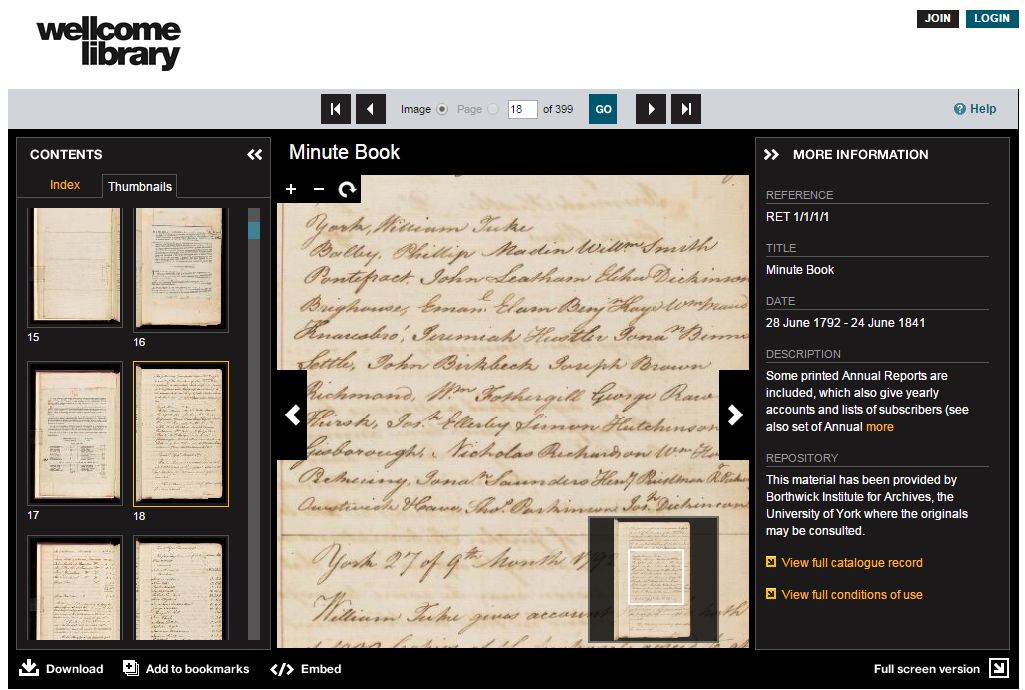
See for example the first item within the catalogue (archival reference RET 1/1/1/1), a minute book from 28 June 1792 to 24 June 1841. On the Wellcome Library catalogue we can see both the catalogue description of the item and the digital surrogates produced by our digitisation team and displayed within a viewer that allows you to move to the page of interest, zoom into the text and pan around the document.


wellcomedigitallibraryRET_1_1_1_1.jpg


This is just a taster of what is to come. We hope to highlight other interesting items from the archive as the project progresses so watch this space.


Jenny Mitcham, Digital Archivist, Borthwick Institute