Showing posts with label Borthcat. Show all posts

Thursday, 9 May 2019

Here’s looking at EU - Borthcat data shared with major networks


Just in time to celebrate Europe Day, we have successfully shared Borthcat’s catalogue descriptions with two major online portals: Archives Portal Europe and the Archives Hub.


RET/8/9/3


The project builds on work to convert and import the detailed catalogues we have for some of our major holdings into Borthcat. Together with the summary descriptions from Project Genesis and the outputs of recent cataloguing projects, it makes over 670 of our collections, and thousands of detailed catalogue descriptions, more easily discoverable by wider research communities. Sharing the data allows our archives to be viewed and interpreted alongside different material from the networks’ respective European and UK contributors. This means archives can be displayed, searched on and contextualised in different and exciting ways.


It’s difficult to imagine the power that you’re going to have when so many different sorts of data are available.” Tim Berners-Lee


Gateways to discovery

Archives Portal Europe (APE) provides access to information on archival material from across European countries. It is the first time European archives have collaborated and aggregated their data on such a scale and has brought together more than 255 million records from several hundred institutions in more than 30 EU countries. The portal also acts as a data aggregator for Europeana. This offers us future possibilities for links to our digitised archives and other digital objects to be surfaced in a portal which already brings together more than 50 million digitised items, and to continue working alongside the Archives Hub and APE to document and provide access to a shared cultural heritage.

Milnes Coates Letter 787
The Jisc Archives Hub is a vital part of the research and education landscape in the UK. Its open access and standards-based ethos give researchers the ability to search across the huge wealth of UK archives. It shares our vision of making the most of our data, creating descriptions once and using them in many different ways. The technology underpinning the Hub now allows the service to take data from various archive management systems and gives contributors even greater control in the timely uploading, publishing and modification of their descriptions, with a seamless workstream supporting publication to portals like APE.


Realising opportunities

Working collaboratively and sharing our data is central to the continued improvement and development of our resources. As we establish, adopt and drive common standards across different archive systems and datasets we can make sure our descriptions work alongside those created by others and we improve the quality and maximise potential of our data. This helps us and researchers to get the most out of the information and expands the horizons for collaboration and discovery.


Archie the Archive Squirrel

Thursday, 20 July 2017

An English Socialite in Paris: The Letters of Lady Victoria Stanley

‘Fun like sunshine, mixed with sense like salt’ was how an anonymous correspondent in The Times described Lady Victoria Bullock following her untimely death in November 1927, at the age of only 35.   This description is borne out in the lively bundle of letters by Lady Victoria which were deposited at the Borthwick as part of the Hickleton Papers, the extensive archive of the Earls of Halifax, which include the papers of Lady Victoria’s eldest daughter, Ruth, wife of the 2nd Earl.

The 19 letters span 28 years of Lady Victoria’s life in all, with the majority dated between 1918 and the mid 1920s.  They provide a fascinating glimpse into the world of an aristocratic socialite in the years after the First World War, when continental Europe was once again accessible to those who could afford it and the Roaring Twenties brought new fashions, music and attitudes.  


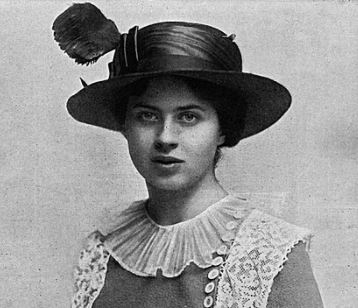
Lady Victoria Stanley. Copyright: Daily Sketch, 1915.


The only daughter of Edward Stanley, son and heir of the 16th Earl of Derby, and Lady Alice Montagu, daughter of the Duke and Duchess of Manchester, Lady Victoria was born into the privileged world of British high society in the closing years of the reign of Victoria.  

One of the earliest letters in the bundle, written to her ‘darling sweet Mamma’ in March 1902, describes a quiet country childhood at the family’s Coworth Park and Knowsley estates with her brothers Edward and Oliver, riding her pony Kruger, playing in the gardens and practicing the piano.


Lady Victoria to her mother, the Countess of Derby, in 1902
Borthwick Institute, Hickleton Papers


Wedding of Lady Victoria Stanley and Neil Primrose.
Copyright: Daily Mail Historical Archive, 1915


In 1915, at the age of 22, she married Liberal MP Neil Primrose, son of the 5th Earl of Rosebery, in a ceremony attended by Queen Alexandra and three of the royal Princesses, as well as David Lloyd George and a young Winston Churchill.  Their daughter Ruth was born in April 1916, but the marriage was cut tragically short by Primrose’s death in active service during the Sinai and Palestine Campaign in November 1917.


Thus at the age of only 25 Lady Victoria found herself a wealthy widow and when her father, to whom she was extremely close, was appointed Ambassador to France the following year, she went with him, arriving in Paris in the closing months of the war and at the very thick of the political and diplomatic action.  She found the city to be ‘the most wonderful place in the world’ and her 1918 letters are full of famous names and crowded social engagements as the great and the good began arriving in Paris for the post-war negotiations.  Sir Henry Wilson, Lloyd George and Admiral Hope attended her ‘England luncheon-party’ in late 1918. Sir Henry, she wrote, was so ‘terribly bored’ with his fellow politicians, or ‘frocks’ as he called them, that he ‘lunches, dines and comes to tea’ whenever he can. She played lawn tennis with Sir Eric Drummond, later the first Secretary-General of the League of Nations, and the Duc d’Albe invited her to go to Spain after the war. ‘As I have already made plans to go to Monte Carlo,’ she wrote, ‘I don’t believe I shall ever get back to England!’

She bought Parisian clothes and persuaded her friend Bee to do the same, admitting to her mother that she had ‘led her into temptation in the way of clothes,’ and that she herself had entirely lost her head in this direction and ‘bought masses’ of the new fashionable shorter skirts and thin silk stockings.

Her father’s post as Ambassador came to an end in 1920 but the surviving letters show that Lady Victoria was all too happy to remain, at least for long periods of time, in France.  In June 1919 she had married again, this time to Malcolm Bullock, a Captain of the Scots Guard and later Conservative MP for Waterloo.  The letters Lady Victoria wrote to him over the next 4-5 years, addressed always to ‘My own darling’ and signed from ‘ever your very loving wife, Victoria,’ reveal plenty of the fun and the salt described by The Times.  Her observations to him are often acerbic and rather funny. Writing from Paris in 1921 she describes the Duke of Marlborough and his bride as being ‘very much the young engaged couple, who have decided not to dance with each other but make googly eyes across the room instead.’  

Lady Victoria to her husband Malcolm Bullock, 1921
Borthwick Institute, Hickleton Papers

At another dinner she was made (as the only foreigner) to sit next to the King of Romania, who to her horror only wanted to talk about Bolshevism, meanwhile the Duchess de Guiche ‘evidently thought she should be next to him & sniffed round my place like a dog round a lamp post.’  On that occasion she seemed to rather admire her fellow guest Daisy Fellowes who managed to avoid having to stand all evening in the presence of royalty by immediately feigning a bad foot so she could retire to a chair in the corner and be left alone.  In a later letter, dated 1924, she wrote she was having ‘such a marvellous time that it is almost turning my head. I feel well dressed, I feel I am almost amusing, in fact all the things the Cadogans think they are & are not!’

Lady Victoria was evidently extremely popular, her letters chronicling a whirl of social engagements with numerous people, from lunches and dinners, to balls, plays, drives, dancing, golfing, horseriding and long evenings at the casino, sometimes until 4am.  ‘I am having a glorious time here & I feel quite mad,’ she told her husband in one letter of summer 1921, ‘I tremble to think what I shall be like with a mask on at the Bal de l’Opera on Saturday!’

Lady Victoria to her husband Malcolm Bullock, 1921
Borthwick Institute, Hickleton Papers

In a letter sent in April 1924 she sets out the numerous entertainments she has arranged for her husband’s imminent visit, including dinners out and trips to the theatre and the music hall.

Lady Victoria to her husband Malcolm Bullock, 1924
Borthwick Institute, Hickleton Papers


Her letters show that she continued to be a keen, though canny, shopper, writing to her husband that she had been ‘quite good about clothes,’ only buying an evening dress and skirt from Paton, an afternoon dress, two knitted skirts and some jerseys from the Russian ladies, which were ‘just like Chanel’s & quarter the price.’  In an unexpectedly modern anecdote, she also writes that she had her ‘nose done’ in January 1921, though it is not clear from the letter what exactly this entailed.  Rather startlingly, it involved her being given ‘a liberal application of cocaine’ to prevent her feeling anything during the procedure. ‘The doctor kept on warning me that I might feel faint or hysterical from the effects but I have a very odd constitution as I felt absolutely nothing!’ She concluded that the only remarkable thing it made her do was write some letters she had been avoiding.

Lady Victoria to her husband Malcolm Bullock, undated

Perhaps her most enduring interest however was horseracing.  This was perhaps hardly surprising given her ancestry.  The Epsom Derby was named for the 12th Earl of Derby and her father, the 17th Earl was a prominent owner-breeder, his horses winning the Epsom Derby, the Epsom Oaks, and the St Leger Stakes.  Lady Victoria’s 1902 letter to her mother references their horse Pellisson failing to win his race and the racing at Knowsley and even amidst the whirl of her new Paris life in 1918 she found time to ask her mother who she should back ‘for the Cambridgeshire’ and to wonder whether Cecily remembered to do her bets for her that week.  

Her 1920s letters are filled with further references to her own and her family’s horses chances at different races. Of the 1921 Prix de Diane she writes ‘It was rather a slap in the face to the French jockeys that the first three...yesterday were ridden respectively by Bullock, Donoghue & Childs. Maurice de Rothschild’s victory was received in stony silence.’ ‘I really think I must have seen thousands of horses,’ she writes in another undated letter from France, ‘I have been going around neighbouring stud farms in the mornings, then racing in the afternoon & yearling sales in the evening,’ adding that her expeditions had served to remind her just ‘how little I really know about horses.’  Only a year before she died she started a racing stable of her own in France with Major Dudley Gilroy.  

Lady Victoria to her husband Malcolm Bullock, undated [1920s]
Borthwick Institute, Hickleton Papers

Both of her daughters, Ruth Primrose and her child with Captain Bullock, Priscilla Victoria, shared their mother’s love of racing and would later become two of the first three women admitted by the Jockey Club in 1977. Priscilla’s grandchildren, Andrew and Clare Balding, are in turn well known today for their involvement with racing, as a trainer and an amateur jockey, journalist and television presenter respectively.  

Lady Victoria Bullock’s death in 1927 came as a devastating shock to her family.  Whilst hunting with the Quorn near Lowesby Hall, she struck her head on a low bridge and was thrown from her horse and found unconscious.  Her husband quickly arrived from London and her mother from Knowsley Park. An urgent message was sent to her father, who was on his way to Cannes, and he returned by aeroplane early the following morning, but to no avail.  Lady Victoria never regained consciousness and died at 3pm on the afternoon of the 26th November.  

The last two letters in the bundle were sent to Captain Bullock after her death. The first is a letter of condolence from fellow MP Winston Churchill, who sent his deepest sympathy to Bullock on the 10th December, ‘though well I know how useless words are, & how nothing but the passage of time mitigates gradually the pain & awful sense of deprivation.  You & Victoria were so suited to one another, so devoted to each other...that this separation & destruction of yr happiness seems doubly cruel.’  


Winston Churchill to Malcolm Bullock, December 1927
Borthwick Institute, Hickleton Papers

The second is from her father, written at the close of the year from France and accompanying ‘a photograph of our darling.’ ‘I can’t talk or write to you about her,’ the letter reads, ‘I am too great a coward, but I loved her - as no man has ever loved his daughter & with her has gone all joy from my life.’  Touchingly he adds that he wants Bullock to know that he will be to him ‘all that I tried to be to her’ and that he has in the earl ‘a friend to whom you can always turn & who would always try the best of his ability to help you.’ He ends by sending his son in law every good wish for 1928, knowing that ‘for you, as for me, no year in future can be a happy one - except the one in which I rejoin her.’

For her family and those who knew her, the words of the anonymous Times correspondent were all too true, ‘without her, the world was a duller and greyer place.’


The letters of Lady Victoria Bullock, nee Stanley, are part of the Hickleton Papers at the Borthwick Institute for Archives.

Tuesday, 4 July 2017

The World’s Largest Telescope

Anyone attending the Great Industrial Exhibition in London in 1862 could have been forgiven for passing by the sight of two circular blocks of glass, 26 inches in diameter and two inches thick, standing on their edges being displayed by Messrs Chance of Birmingham. Impressive though they were these optical glasses could easily be missed alongside the great machines - such as Charles Babbage’s analytical engine, cotton mills, maritime engines, and London and North Western’s passenger locomotive, Lady of the Lake - being displayed by the 28,000 exhibitors from 36 countries.

However, there was one visitor to the event who saw the opportunity to create a lasting legacy. Robert Stirling Newall of Gateshead, whose fortune was made from the manufacture of wire rope,  purchased the glasses for £500 pounds each. They were the largest in the world at the time, being nearly twice the diameter of the previous largest, and Newall’s intention was that they would be the foundation of a telescope that would exceed in size all that had gone before.

The project would thrust England, and York in particular, to the forefront of the optical arts, ‘as we were in Dolland’s time’ according to the journal Nature. Contemporary commentators believed the optical art had been stifled in England by an ill-advised duty on glass, and for many years England had been dependent on foreign built telescopes, mainly from France and Germany. At the time of the Great Industrial Exhibition the telescopes with the largest object glasses in England - at Greenwich, Oxford and Cambridge - were all of foreign make. Newall, however, opted to use T. Cooke and Sons of York for his grand project.

Cooke had been at the forefront of resurrecting the art of optical manufacture in England. Samuel Smiles in Men of Invention and Industry relates that Cooke made his first object glass from the base of a glass tumbler, and from this unlikely beginning set up T. Cooke & Sons in 1837. Based at No. 50 Stonegate, York, he specialised in making telescopes and other optical instruments, such as surveying equipment, microscopes, turret clocks and later steam engines (for an unsuccessful steam carriage or motor car). He gained a reputation for excellence, and in 1860 constructed a 5.25 inch telescope for HRH the Prince Consort that was erected at Osborne House, and also provided Sir Norman Lockyer a telescope for his Wimbledon Observatory in 1861. In 1862 he exhibited his creations at the Great Industrial Exhibition in London, bringing home two First Class Medals, one for the excellence of the object glasses and mountings of his telescopes, the other for the construction and finish of his turret clock, and it was here that he came into contact with Mr Newall.

Newall sought quotes from both Cooke and Thomas Grubb of Dublin, but Cooke was so eager for the contract that he bid too low and underestimated how long it would take to construct. The project took far longer than the year he had anticipated. Newall became increasingly frustrated throughout the endeavour, whereas Cooke frequently sought advances to cover his costs. The project nearly caused the demise of Cooke’s business which was still suffering financial difficulties as a result several years after the completion of the telescope; Sir Norman Lockyer writing in 1878 stated, ‘Cooke did not hesitate to risk thousands of pounds in one great experiment, the success of which will have a most important bearing upon the astronomy of the future’.

The general design was the same as Cooke’s equatorials  but the huge size necessitated special arrangements. The main issue was the crafting of the glass lenses. Special equipment had to be designed to handle the discs, and the lenses had to be floated in mercury to prevent them breaking under their own weight. Lockyer stated that it took 1560 hours to grind the discs to the required shape, the thickness being reduced by an inch in the process. The work took place at Cooke’s Buckingham Works, Duke’s Hall, in the Bishophill area of York, but the scale of the project required the final assembly take place in the open near the city wall; Employee Mr Graham recalled the telescope “…..was a big undertaking and it had to be erected on the moat, near the City walls about the place where Newton Terrace now stands.”. It was 1870, and the telescope had taken around six years to complete. Once assembled it was taken to Newall’s observatory at Ferndene, Gateshead, and it was not until 1871 that it was fully installed in the observatory.

The resulting instrument weighed 9 tons and was 32 feet in length. At a time when the largest lenses in Greenwich, Oxford, and Cambridge were 15. 5 inches, the largest in Russia at Pulkova were 15 inches, and the largest in the U.S. were 18.5 inches, the step forward in manufacturing techniques required to produce a telescope with 25 inch discs, weighing 144lb, was considerable. The telescope was nearly twice as powerful as the 18 inch Chicago instrument, having a 485 inch area compared to 268, and had a focal length of 29 feet. The diameter of the object end was 29 inches, the diameter of the tube centre 34 inches, the diameter of the eye end 22 inches, and the support pillar was 19 feet high.

The tube was cigar shaped and made of steel plates riveted together in 5 sections. Inside there were five other tubes of zinc increasing in diameter from eye end to object end. The wide end of each tube overlapped the narrow end of the next with an inch of space left around the end of each to aid ventilation and prevent currents of warm air interfering with the light. The ends were lighter than the centre to prevent them destabilising the telescope.

Fixed above and below the eye end of the tube were two finders, each of 4 inches aperture, 12.5 inches in area, to aid accessibility. An additional telescope with an object glass of 6.5 inches was fixed between the two finders to assist the observation of objects (such as comets) for which the main telescope was not suited.

The observatory housing the instrument was between 40 and 50 feet in diameter and packed with apparatus to allow the telescope to be easily maneuvered, the temperature always the same inside and out to prevent currents of air interfering with observations. However, the atmosphere in England was ‘not the best suited for such an instrument’ and as early as 1870 the journal Nature was reporting that Mr Newall intended to move the instrument after preliminary testing to a location more suited to astronomical observation. This was taken to mean that it would not remain in England ‘every increase in the size of the object-glass or mirror increases the perturbating effects of the atmosphere, so that the larger the telescope, the purer must be the air’. However this was not to be the case, and Mr Marth, known for his work with the Lassel Reflector at Malta, was given charge of the instrument in Ferndene.

Newall’s telescope drew widespread attention, the US government sent Commodore BF Sands of the US Naval Observatory with a deputation of astronomers to examine it and this resulted in a commission of a telescope that would be one inch larger. Austria ordered one the same size.
Cooke never got to see the result of his work as he died in October 1868, whilst Newall was only able to claim to be the owner of the world’s largest refracting telescope for a short period, being overshadowed by the 26 inch Washington Naval Observatory telescope in 1873. However, the telescope was of such exceptional quality that it was used for years to come. On Newall’s death in 1889 it was moved from Gateshead to Cambridge University Observatory and by 1925 it was in the charge of Prof James Newall, Mr Newall’s son, director of the Polar/Solar Physics Observatory, Cambridge. There it stayed until the 1950’s when it was donated to the Greek National Observatory, Mt Penteli, Athens, where it can still be found today having undergone a complete restoration in 2013.

T. Cooke and Sons continued to produce telescopes and exported all over the world, eventually merging with Troughton and Simms in 1922, and Vickers Instruments in 1963. The records of the company can be found at the Borthwick Institute for Archives as part of the Vickers Instruments archive. An online catalogue for the archives of Vickers, Cooke, and Troughton and Simms can be viewed on Borthcat.

Further information:
http://www.instrumentsoflight.com/newall.html 
https://www.repository.cam.ac.uk/handle/1810/218396

A full technical description of the telescope can be found in Stargazing, past and present, by Joseph Lockyer.

Graham Hughes,
Archives Assistant.

Wednesday, 28 June 2017

71 Years Wild: cataloguing and exploring the archive of Yorkshire Wildlife Trust

 Reed Warbler at Askham Bog in the 1930s, by Arthur Gilpin.
BI/YWT/5/1/1/6/1
As we come into the last days of this year's #30DaysWild campaign, it seemed fitting to celebrate the end of my year-long project cataloguing the archive of the Yorkshire Wildlife Trust - and what a year it's been! I've been lucky enough to delve right into the most detailed of archives, from the papers marking the establishment of the Trust and its day-to-day correspondence, right through to the note documenting the sighting of a single rare moth and a letter recording a daring dolphin rescue mission off Spurn Point. It's been a real dream come true for anyone with an interest in the natural world, the history of the conservation movement and also for me as an archivist at the start of my career. You can explore the 2000+ entries through our online catalogue, Borthcat.

When I started the project back in April 2016, there were 3.5 cubic metres of boxes to work through. A year later and there's almost double that amount as additional material has been sorted and deposited with us. Through the project we've also been able to develop new relationships with other organisations around Yorkshire which have led to the deposit of new archives relating to natural history, including Kit Rob's botanical notes and Dr Michael Thompson's bat recording study. It's really exciting to be able to build on our existing natural science records and to open these up as as research resource for everyone to use. 

Just part of one of  the lists of evocative
English plant names - among my favourite items!
As my first post as a qualified archivist, I felt equally excited and trepidatious to take on such a significant project and I feel like I've really learned a lot over the last year, not just about the incredible work YWT have been undertaking in Yorkshire over the last seven decades, but also about working on a collaborative project, balancing the different aims of the work across a fixed timescale and (on a practical level) learning my trade! I've been able to really get my teeth into some large-scale cataloguing work, and have also had the opportunity to blend these traditional archival skills with exploring the flexibility and functionality of  our cataloguing software, Access to Memory (AtoM), the open-source interface developed by the ICA and Artefactual Systems.

Perhaps most importantly, it's allowed me to share the archive with a wide range of user communities and to gather different perspectives on what archives mean to them. The YWT archive is so heavy with the histories of people across Yorkshire; the founders of the Trust, the pioneering staff who developed the Trust and cemented its position as a fearsome campaigning body at national and international level, and - crucially in an archive like this - documenting the vast contribution made by volunteers and members of the public who have been (and still are) dedicated to the landscapes of Yorkshire and to recording and preserving its wild places. 


Environmental data on Askham Bog, 1933.
BI/YWT/5/1/2/4/1
Although the funded term of the project is now over, there is still a lot of scope to develop the YWT archive and to continue to unlock its research potential. The newly-catalogued material covers a wide range of disciplines and its relevance can be seen in the ongoing development of public policy. This is especially evident in the relationship between wildlife, habitats and agriculture - particularly in developing campaigns for raptor protection, in the control of bovine tuberculosis through badger culling and in the effects, and the mitigation of the effects, of coastal erosion. Even more recently, political changes in this country and America mean that records documenting climate and other environmental changes are ever more important. This project has allowed us to bring together an authoritative and accessible source of environmental data and to make it available to everyone. It has been a real privilege to work on this project and, although I am no longer working on the archive full-time, I will definitely be keeping things ticking over!


Lydia Dean
Project Archivist

Box count: 212/200 (couldn't resist!)

If there’s anything in particular you’d like to know about the project or how we approached it, do feel free to comment below or to get in touch through our Twitter or Facebook. You can also read other blogs on this project here.


Wednesday, 23 November 2016

The Nature of the Job II: Structuring the archive of Yorkshire Wildlife Trust


In my last blog about my project cataloguing the archive of the Yorkshire Wildlife Trust, I wrote about how I got started with the survey of this archive. In this instalment, I'll be writing about my experiences in developing a structure for the archive, why it's important and how it'll translate to our online catalogue, Borthcat

Trying my hand at some slip listing for the Skipwith Common files.
From the very beginning of the project, I was aware of how vital it was for the structure of the archive to be right. The organisation was (and still is) a complex one and I want the structure of the archive to convey a sense of the wider scheme of the Trust's business, allowing users to contextualise, through their interrelationship, the individual records they look for. Of course this applies to all archives, but particularly so in this project for a number of reasons. Firstly, the archive is still very much a living repository of information - it is actively consulted by YWT staff as part of ongoing legal and campaign work and there are regular accruals of new material. This means that the records themselves are not necessarily going to be in our physical custody and in turn means that the intellectual control we have over these records needs to be robust. Secondly, aside from the additional deposits of archival material already received, the Trust continues to dynamically develop and so the structure needs to make allowances for future growth. Thirdly, (and perhaps a little intimidatingly for me!) at the time of writing, no other Wildlife Trust in the UK has deposited archival material in such quantities in a public repository so it is hoped that this project will provide a model for any future Trusts in arranging their archives.

The beginnings of a structure!
So while the latter makes Yorkshire Wildlife Trust unique in both the scope of its archival material and its public availability, it also means that there aren't any parallel organisations for me to reference in structuring this archive. So I was relying on a number of sources in developing the scheme - first and foremost my own research into the records themselves, then the excellent published history in Tim Sands' book 'Wildlife in Trust: A hundred years of nature conservation' and then on the living memory of the organisation in the shape of members and trustees, some of whom form part of the board monitoring and supporting this project.

Using survey notes to identify links between files.
Here, minutes copied and sent to Executive Committee
As an organisation, YWT has changed over its 70 year life, shifting from an amateur conservation body in 1946 to a professional campaigning organisation. Alongside this have come numerous administrative changes, all impacting on how records were accumulated by the organisation. Luckily, these changes have been well documented (for the most part) and so I was able to get a good understanding of the provenance of the archive. These records of change were a useful point of reference for me in developing my structure, as were the numerous references to now obsolete filing systems - often filed by the initials of the person generating the correspondence, with date and document references, and then by an increasingly complex system of alphanumeric codes. I used these to give me an understanding of how committees, departments and individuals interacted with one another, as well as documenting the links between the centralised functions of the Trust and the vital operational work carried out all over Yorkshire by volunteer committees.

I started working on the structure of the archive at the same time as surveying the records. I've worked iteratively, and initially worked on the overarching structure of the archive. I'm now on the fourth (and hopefully final!) version which incorporates 7 subfonds covering the foundation of the Trust, its governance, administration, liaison work, conservation records and campaigns. The seventh subfonds, and the one I'll focus on here, is the one covering the sites associated with the Trust. The majority of the material in the archive relates to the sites that the Trust has owned, managed and advised on and each site has anywhere between 1 and 70 files including environmental records, management records and research into each site.
I decided to move away from slip listing and started to use a piece of
mind mapping software. Above: working copy of Skipwith Common version 3!

I started the process using the files of Skipwith Common, which is no longer a Trust reserve, but which was one of the first sites whose records I surveyed. My first, uncertain, attempt at a structure split the files into three subsubsubfonds (!) but I felt that this structure was too generic to really reflect with accuracy the unique and complex nature of the ecology and management of each site. This became increasingly apparent as I tried to apply this structure to more sites. I decided to go back to the drawing board and began to work on a different structure, which even as I started it, felt much better in tune with the nature of the records. A good lesson in going with your gut feeling, even as a new professional!

This overall structure will well reflect the types of records that are present in the archive as well as the symbiotic relationship between the ecology of each site and its stewardship. Further, although loosely based on the same framework, the records of each site will have their own individual structures according to the records that are deposited. 

Sneak peek at how the records for Askham Bog will look on our online catalogue

But how will it look online? This structure looks lovely and clear on paper (at least to me!) but will appear very differently through our online catalogue. Above you can see a sneak peek of the entry for Askham Bog as it currently stands, although before it's published there will be more information added and probably a different iteration of AtoM too! I'll be adding the descriptions of each file very soon and I'll be blogging about that process in the next instalment of this series. For now, I'll continue to add files to my skeletal framework and to refine the structure, adding new levels as more information comes to light. It's really exciting to see it finally taking shape and emerging from my sea of drafts!


Lydia Dean
Project Archivist

You can follow updates on this project via Twitter, Facebook and this blog. Please do get in touch with any questions or comments and I'll be happy to help! 

Wednesday, 9 November 2016

Testing the online catalogue: results of user testing

Back in the Spring of this year, we carried out two phases of user testing on our online catalogue, Borthcat.   The key results of the first phase of testing are described over on our Digital Archivist, Jen Mitcham's, blog, as well as some of the actions we were able to take prior to the public launch of Borthcat in April 2016. While the basic phase of testing allowed us to make some really practical and in some cases speedy changes to the catalogue interface, the second phase of testing really gave us insight into individual user interactions with the catalogue  to examine how users search for and retrieve information from our holdings. Whilst results of similar testing have been carried out with Access to Memory (AtoM: our web-based, open-source archival description software) in one or two other institutions in North America, at the time of testing the Borthwick was the first UK AtoM user to carry out such detailed work. The findings of both the first and second phase of testing formed the backbone of my Masters dissertation in Archives and Records Management and, as I'm graduating from the University of Dundee next week (!), it seemed like the perfect time to give you a report into the results from the more detailed tests we carried out.
The Borthcat homepage


Why did we do it?
Across the archives sector, online access to information is now pretty much routine and users often expect digital versions of finding aids and, ideally, digitised version of the documents that they can search and examine. In developing our own online interface, Borthcat, we wanted to make sure that not only was information available to users but (more crucially, in my opinion) that users were able to successfully find that information using the tools we had provided. Looking at our own user base from the statistics we capture, between March and April 2016 - just prior to the launch of Borthcat - there were over double the amount of remote enquiries (1614) to physical visits (731) to the searchroom. In the same period there were over 13,300 unique hits our online digital document repositories: Find My Past, the Cause Papers and the Archbishops' Registers. We wanted to make our catalogue as informative and accessible as possible, not least because a large proportion of both our current and future users are researchers who may never be able to physically visit us at all.


How did we do it?
Jen's blog explores the results of the first phase of testing that we carried out - recruiting our users through a mixture of social media channels and onsite advertising in the searchroom and asking them to complete a brief online questionnaire.

The second stage of testing asked participants to work through a series of set exercises using Borthcat while being observed. During these sessions, participants' screens were recorded using Screencastify to capture their mouse movements and the number of clicks they made.

We wanted to capture some qualitative data on user interactions to enrich the statistical information we'd obtained in the first round of testing. We used the Archival Metrics Toolkit (a fantastic resource!) to help design the exercises and tried to ameliorate the effects of such a controlled environment. Of course, we couldn't hope to fully replicate a researcher's independent enquiry but the results we obtained were interesting and gave us an insight into our users that we hadn't had before.


What did we find out?
Here are just a few of the main findings from the testing.

Limited use of hierarchical menu
Users heavily relied on using the free text search bar at the top of the Borthcat homepage to identify records. Only one participant in the second phase of testing used the hierarchical information available on the left-hand side of the screen, and another used free text searching as their sole retrieval technique throughout the test period. This could be for a mixture of reasons. The majority of our entries in Borthcat are at collection level, and so there are fewer hierarchical descriptions available currently (although the test exercises focused on those archives with full catalogues). Further, and as reflected in the basic phase of testing, many users have become familiar with a free-text search when using search engines like Google.

Overwhelming 'wall of text'
Users found the level of information available on each entry, and the amount of results returned for some searches, to be overwhelming in some cases. There was an overall idea, again in common with the basic testing, that users wanted Borthcat to be able to tailor information more specifically to their queries. I think that this is where the presence of an archivist or the staff in the searchroom who understand our holdings are the most valuable asset we can have; this situation would be more easily resolved for a researcher who was onsite and able to consult a staff member for advice. Where the researcher is remote and is searching for unfamiliar (or unknown!) material then it is vital that the catalogue presents information clear enough for them to make an informed choice.  Some users in the observed tests used keyboard techniques like CTRL+F to narrow down occurrences of specific terms within an archival description, although the majority didn't.

Typeahead search suggestions 
Understanding icons
A further usability issue to come out of the detailed testing was that the icons used in Borthcat's 'Typeahead' search - where potential results are generated as you type - are not defined in our customised iteration of AtoM. In an exercise designed to look at how users interacted with our subject-term listings, participants were asked to find out how many of our holdings contain diaries - a subject terms that has been linked across several separate archives. The majority of users did this by searching for the term ‘diaries’ in the free-text search box. When they did so they were confronted by several entries, all called 'Diaries', at item, file and sub-series level, all from separate archives, as well as a subject term entry for diaries in general. The archival entries are all marked with a 'description' icon and the subject entry is marked with an icon showing a label. For those of us working with Borthcat on a daily basis, it was simple to select the relevant entry and to continue our work but most participants in the study repeated the search several times in order to work through all the options before finding the entry they required. This allowed us to identify a way to improve the usability of Borthcat as well as giving us food for thought in how we construct the titles of our records. The linking of records through the use of different subject terms is one of the most interesting capabilities of AtoM - it allows connections to be made across archives in a way that would be very difficult to do using paper finding aids and can draw out unexpected links. Being able to see how users interact with this capability over the longer term will be very important in understanding how researchers can make the most of the information we hold.

A personal connection
It really came across during the testing that users value a personal connection to their research, either through searching for personal names or through bringing their own research contexts and knowledge to the way they search for information. Several users commented that they would really appreciate a feature that would allow them to collect all the records they found interesting in order to look at them again or to send them through to the searchroom for retrieval. This wasn't something I had expected, but is something that other archives do. A great example is the pinboard feature at the Marks and Spencer archive, Marks in Time.


Carrying out this exercise has been really helpful in understanding that what our users want from our records and what we think they want isn’t always the same thing. Involving our users directly in the development of Borthcat was also a fantastic opportunity to engage more with our audience on a project that will be of practical benefit. I must thank all of the participants who took part in each phase of testing; without their invaluable contribution of time in completing both the survey and the observed exercises, we would not have been able to gain the insights we have done into how our users retrieve information, and how they'd like to be able to retrieve information in the future. It is of vital importance for us and for other archive repositories to keep our users’ needs at the heart of their considerations when making archival information accessible online.


Lydia Dean
Archivist


The results of this user testing have been discussed in more detail in my MLitt dissertation ‘Access to Memory: Understanding how users of the Borthwick Institute search for online archival information’ through the University of Dundee. You can find out more about our work with AtoM through our blog and Jen's blog 'Digital Archiving at the Borthwick' .