Showing posts with label free. Show all posts

Friday, 27 March 2015

Rehabilitating John Summerland

It really is a privilege to start blogging for the York Retreat Archive digitisation project. The Retreat captured my imagination as a History undergraduate but I never had the opportunity for in-depth research, for want of an original hypothesis. It seemed like it had all been done before. But somehow an idea came to me, I followed it up and here I am writing a PhD on the Retreat nearly a decade later. The more time I spend with this material, the more I realise there is still a great deal to say about the Retreat. Making these archives available online will enable a new generation of research. So I had better get writing quickly lest someone steals my thunder!

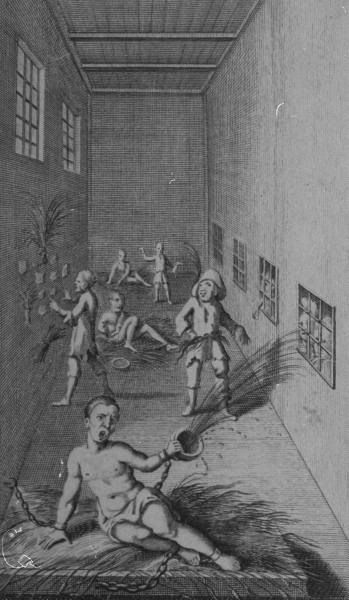
Like so many undergraduates, the first time I came across the Retreat was in Michael Foucault’s Madnessand Civilisation. One moment of the Retreat’s early history particularly resonated with me, and has stuck in my mind ever since;


Tuke
‘Samuel Tuke tells how he received at the Retreat a maniac, young and prodigiously strong, whose paroxysms caused panic in those around him and even among his guards. When he entered the Retreat he was loaded with chains; he wore handcuffs; his clothes were attached by ropes. He had no sooner arrived than all his shackles were removed, and he was permitted to dine with the keepers; his agitation immediately ceased; "his attention appeared to be arrested by his new situation." He was taken to his room; the keeper explained that the entire house was organized in terms of the greatest liberty and the greatest comfort for all, and that he would not be subject to any constraint so long as he did nothing against the rules of the house or the general principles of human morality. For his part, the keeper declared he had no desire to use the means of coercion at his disposal. The maniac was sensible of the kindness of his treatment. He promised to restrain himself.’ (pp233-234, Routledge Classics, 2001)

Naturally, having been let loose myself as it were in the asylum archives, I wanted to know more about this incredibly powerful and important moment.

Whilst we may question Foucault’s analysis and style, he cannot be accused of hyperbole in this instance; the passage paraphrases Samuel Tuke’s account of the incident in his 1813 Descriptionof the Retreat, save for the fact that Tuke probably didn’t witness the incident himself and made no claim to have done so;

‘Some years ago, a man, about thirty-four years of age, of almost Herculean size and figure, was brought to the house. He had been afflicted several times before; and so constantly, during the present attack, had he been kept chained, that his clothes were contrived to be taken off and put on by means of strings, without removing his manacles….’

Tuke added that ‘the patient was frequently very vociferous, and threatened his attendants, who in their defence were very desirous of restraining him by the (straight) jacket.’ (Description pp.93-94)

However, the patient’s case notes (RET 6/5/1A p.77) and correspondence from the family (RET 1/5/1/7) give a different angle to these events. We assume from how Foucault and Tuke use this incident that the ‘maniac’ (whose name was John Summerland) had been under restraint in another institutions for some time before admission to the Retreat. The moment of Summerland’s release is often used to illustrate a liberating shift in psychiatric methods as patients were brought out of the darkness of Bedlam dungeons and into the light of ‘moral treatment.’ Yet the reality is less straightforward. Summerland’s case notes reveal he had indeed been restrained, ‘fastened with chains’ and ‘repeatedly bled with cathartic medicines’ whilst under confinement in Philadelphia. But he then returned to England on a voyage which would have taken weeks, and would not have been possible under restraint. Upon his return to England he lived with his parents in Staffordshire for over two months and again there is no mention of him being under restraint here or on his journey to the Retreat. Summerland’s case notes add further information which seems to contradict Tuke’s version ‘he frequently converses rationally, tho in a high strain… It does not appear that he has ever attempted to injure himself or others.’ And whilst Summerland was indeed ‘a large man of great muscular strength and power’ he was ‘much reduced in flesh on his admission.’

Letters from his family to the Retreat show that Summerland, despite his vague diagnosis of ‘derangement’ managed to attend Quaker Meetings for Worship before his admission. This involved sitting in silence for a considerable amount of time. Again, hardly the place for a raving maniac.

Samuel Tuke had access to all the Retreat case notes and used them to statistically demonstrate the Retreat’s success in Description of the Retreat. It seems that Tuke exaggerated Summerland’s symptoms to promote the Retreat’s therapeutic methods. This well-intentioned exaggeration has gone largely unquestioned by history, leaving poor John Summerland with a bad reputation. Happily he was discharged after only four months and suffered no relapse. Yet it was hardly the miracle cure that Samuel Tuke claimed, ten years later in Description of the Retreat; as he was sent on his way to the Retreat, John Summerland’s brother William wrote to William Tuke that John ‘seems much better and I make no doubt with your regular treatment and attention he will soon be well.’ 


This is one of a series of blog posts published as material from the Retreat archive is digitised and made available online. More information about the Wellcome Library funded project to digitise the Retreat archive can be found on the project pages of our website. Digital surrogates from the Retreat archive project so far are available via the Wellcome Library. 

This blog post was written by Jon Mitchell who is a doctoral student in the Department of Theology and Religious Studies at the University of Leeds. His thesis relates to eighteenth century Quaker attitudes to mental illness, and is funded by The White Rose College of the Arts and Humanities. He can be contacted at prjm@leeds.ac.uk.  

Friday, 10 October 2014

The York Lunatic Asylum Scandal

The York Lunatic Asylum opened in 1777, at a time when little was understood about mental illness. Without organised institutional care available, families were left to deal with the mentally ill at home as well as they could. It was usual to chain lunatics to the walls and to leave them naked (it was not thought possible for mentally ill people to feel cold) and alone. Madness turned people into animals.
                                                
Although there were grand ideals when it was first conceived of providing 'relief to those unhappy sufferers who are the objects of terror and compassion to all around them', York Lunatic Asylum soon fell onto a darker path. In 1790 a Quaker woman called Hannah Mills died at the York Asylum. No Friends had been allowed to see her during her six-week residence, to support her faith or to see the conditions in which she was being held. This led William Tuke to encourage the foundation of the Retreat in York, an institution built upon the Quaker idea that everyone should be treated kindly, and as an equal.

William Tuke (1732-1822)

Concerns about the York Asylum continued to grow. After William Vickers was badly treated by the staff at the asylum, a Justice of the Peace for the West Riding called Godfrey Higgins interested himself in the case. Vickers had been released from the hospital bruised, lousy, dirty and so weak he could hardly stand. Other poorly-treated patients were discovered: Reverend Schorey who had been kicked down the stairs by his keeper, and Martha Kidd whose hip was dislocated during her stay. A meeting was called to examine Higgins' accusations and nearly 40 local gentlemen (including members of the Tuke family and a number of their friends) took advantage of an old rule and paid £20 in order to qualify as governors of the asylum and effect change.

Investigations discovered that the number of patients at the Asylum had been growing, but poor financial management meant that the institution was struggling and conditions for the patients were poor. This should have caused a higher death rate but the figures published in the Asylum's annual reports did not reflect this. Closer examination of the steward's books made it clear that deaths had been concealed. In addition, it was discovered that the physicians at the Asylum had misappropriated significant sums of money from the institution. Before further assessments could be made, a fire began which destroyed one wing of the asylum and all of its early records. Four patients died. Rumours said it had been set by the steward deliberately to conceal the truth but this was never proven. Dr Best was never charged for his fraud but was forced to resign due to ill health.
 
Affluent patients at the Asylum were generally well treated. It was the poor who suffered. On a surprise inspection in March 1814, Godfrey Higgins insisted that the staff opened locked doors near the kitchen. When the key could not be found he threatened to break open the doors with a poker. Finally he gained entrance and found 'a number of secret cells in a state of filth, horrible beyond description', full of female patients, 'the most miserable objects I ever beheld'. Elsewhere, 'you might see more than 100 poor creatures shut up together, unattended and uninspected by anyone'.

 In August 1814 at the governors' annual court, new rules were made and the officers of the asylum were all dismissed. The staff were replaced with help from the Retreat Hospital.

In the aftermath, there was a full parliamentary enquiry to which Godfrey Higgins, Samuel Tuke and others contributed. The report was published in 1815 and can be read for free via GoogleBooks. 

Alexandra Medcalf, Archives Assistant

----------------------------------------------------------------------------------------------------------------------------

You can read more about the Retreat here and more about the Tuke family here here and here

Thursday, 25 September 2014

New website reveals the story of the lost Aero Girls (and boys)


Nearly a year after the search for the real life Rowntree Aero Girls began, I am delighted to announce the launch of a website dedicated to the remarkable stories of the women and men behind this collection of postwar paintings.


Left to right: Stephanie Tennant, Aero Girl portrait by Anthony Devas [R/Aerogirls];
Stephanie Tennant (Archive photograph, 1960s); Aero advert, 1956 [R/Guardbooks/W20] 

As many as 40 Aero Girls portraits appeared in Rowntree Aero chocolate advertising between 1950 and 1957, in British newspapers, magazines and early ITV commercials. An accompanying slogan proclaimed, “For her - AERO – the milk-chocolate that’s different!”

These representations of modern young women formed part of a successful campaign to relaunch the Aero bar onto the UK market following a break in production during the Second World War. Since the early 1990s, 20 of the portraits have been stored in the Rowntree & Co. Ltd Archive, with little known about the artists or the sitters. While the advertisers J. Walter Thompson wanted the portraits to stand out as being ‘different’ - like the chocolate itself - they kept the female sitters anonymous, and the product firmly in the foreground.

The Search

After launching a public appeal for information and hosting a landmark exhibition at York Mansion House in October 2013, we were contacted by our first living ‘Aero Girl’, Pamela Synge. Synge, now in her 90s, is a visual artist, performer and writer. Her portrait was also the only Aero painting to feature in a television advert, on the newly-launched ITV in 1955. 


Another of our early successes was tracing the last living Aero artist, Arnhem veteran Frederick Deane, whose recollections provided the names of two more Aero Girls, former JWT Art Department employee Rhona Lanzon and the Vogue model MyrtleCrawford. Then, in March 2014, we discovered that the renowned contemporary painter (and soon to be winner of the John Moores Painting Prize 2014) Rose Wylie had been an Aero Girl. Wylie reflects that she was a “rebellious art student” at the time, adding that her true image was “more punk than Mills & Boon cover.” In fact, many of the other Aero Girl sitters also worked in the creative industries, as painters, lithographers, film directors and dancers.

Relatives of the Aero Girls and Aero painters have been tireless in helping us to piece together countless fascinating stories behind the paintings, which lead from the battlefields of the Second World War, through polite society in post-war London, to present-day celebrity, touching on art, social history, fashion, the changing role of women and even the Profumo Affair.


Who Were the Aero Girls? project website pages (York Digital Library, 2014)


A new website gathers together archive images, footage, biographies and first-hand accounts about the Aero Girls collection for the very first time and you can explore it all at York Digital Library. 


Over the last few days we have been contacted by another Aero Girl, the subject of Anthony Devas’ Art Student (c.1950). Painter and former art teacher Barbara Pitt was aged 17 and studying at Goldsmiths College of Art, London, when Devas painted her portrait. She moved to South Africa in 1965, and contacted us from her home in Cape Town with some colourful reminiscences of bohemian London and invaluable material from her own archive.

We would love to continue adding information to our online resource. If you would like to contribute to the ‘Who Were the Aero Girls?’ project please contact us at borthwick-institute@york.ac.uk

Kerstin Doble, Project Curator: Who Were the Aero Girls?